


Japan summoned China's ambassador after Chinese military aircraft allegedly locked fire-control radar onto Japanese fighter jets on two separate occasions, amid escalating tensions between the two nations.
The Japanese Ministry of Foreign Affairs said on Sunday that Chinese J-15 fighter jets from China's Liaoning aircraft carrier had engaged in “extremely regrettable” behavior by directing fire-control radar at Japanese aircraft that had been scrambled to monitor the carrier over international waters southeast of Okinawa’s main island.
Locking onto an aircraft with fire-control radar is considered a potential act of attack, as it can force the targeted plane to take emergency evasive action, making it one of the most provocative and dangerous moves a military aircraft can make.
Tokyo summoned China's ambassador, Wu Jianghao, on Sunday to protest the Chinese fighter jets’ behavior and called it “dangerous and regrettable.”
China rejected the allegation and accused Tokyo of "harassing" its forces during a training exercise.
This incident marks a fresh escalation in Japan-China diplomatic tensions, following last month’s deterioration after Japanese Prime Minister Sanae Takaichi said that Tokyo could resort to military action if Beijing attacked Taiwan—a remark that infuriated Beijing and prompted a series of retaliatory measures ranging from a travel ban to a seafood import ban.
Beijing claims self-governed Taiwan as part of its territory and has not ruled out the use of force to achieve what it calls “reunification”—a position firmly rejected by Taiwan’s authorities.
The J-15 jets launched from China’s Liaoning aircraft carrier first locked radar on Japanese aircraft at 4:32 p.m. local time on Saturday, with a second incident occurring at around 6:37 p.m.
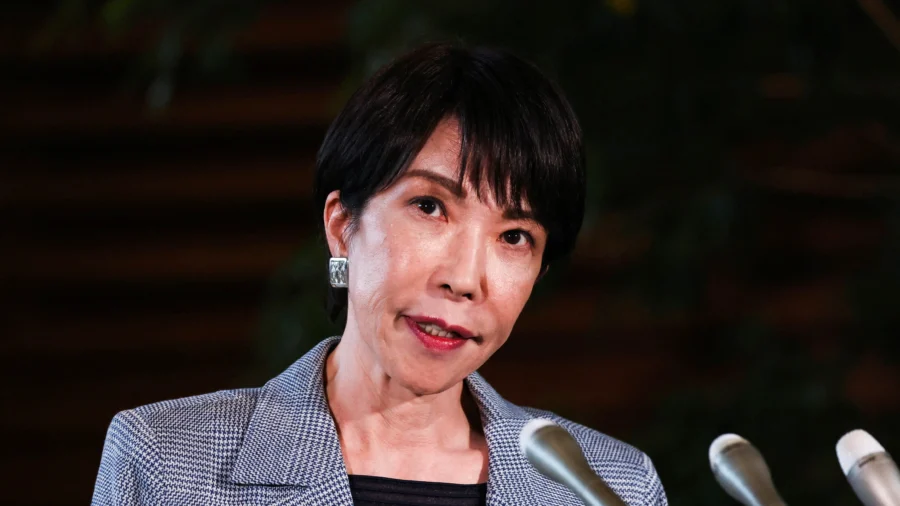
Speaking to reporters on Sunday in Wajima, Ishikawa Prefecture, Takaichi said, “Japan has strongly protested to the Chinese side, and we have firmly requested measures to prevent recurrence.”
“We will respond calmly and resolutely,” she added.
The Chinese regime said that it was conducting “normal flight training for carrier-based fighter jets.”
At a joint press conference with Japanese Defense Minister Gen Nakatani following talks on strengthening defense ties, Australian Defense Minister Richard Marles said Australia will “continue to work closely with Japan” and “stand with Japan in upholding the rules-based order.”
U.S. Ambassador to Japan George Glass has expressed support for Japan amid its tensions with China.
In the National Security Strategy 2025 released on Friday, the Trump administration outlined its goal of deterring potential conflicts with China over Taiwan and the South China Sea by bolstering U.S. and allied military capabilities.
Japan is home to the largest overseas deployment of U.S. military forces, including thousands of U.S. Marines stationed in Okinawa.