


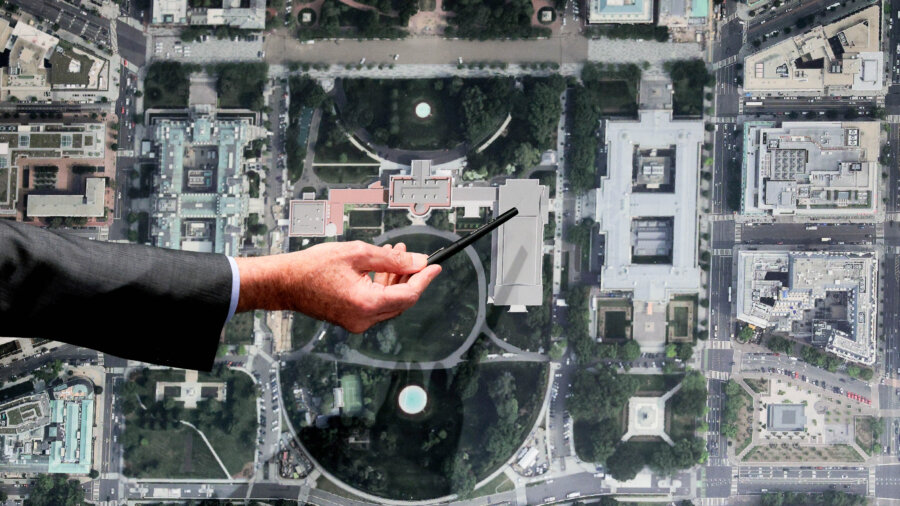
A federal judge ordered on April 16 that construction of the White House ballroom be limited to underground.
In a 10-page opinion, Judge Richard Leon of the U.S. District Court for the District of Columbia wrote that "below-ground construction" for national security facilities and to protect the president and the White House may continue, while "above-ground construction of the planned ballroom" must be stopped.
The decision follows a preliminary injunction granted on March 31 in favor of the National Trust for Historic Preservation in the United States, which sought to halt the project. Leon’s original order allowed for limited exceptions for work that is “strictly necessary” to ensure the safety and security of the White House and its occupants.
In his latest ruling, Leon rejected the administration’s interpretation of that exception, writing that officials had attempted “to turn this exception on its head” by arguing that it permitted the entire project to move forward. He said he “cannot possibly agree” with that reasoning.
In a post on Truth Social, President Donald Trump criticized Leon, calling his ruling “a mockery to [the U.S.] court system.”
The National Trust filed a motion for clarification on April 1, citing public statements by the president that suggested a broader interpretation of the court’s order. The administration responded by filing an appeal and an emergency motion to block further restrictions.
On April 11, an appeals court sent the case back to Leon with instructions to clarify how the injunction and its exceptions apply to safety and security concerns during the litigation. The court also extended a temporary pause on the injunction through April 17.
"[Trump] may at any time go to Congress to obtain express authority to construct a ballroom and to do so with private funds," Leon said. "Indeed, Congress may even choose to appropriate funds for the ballroom, or at least decide that some other funding scheme is acceptable.
"Either way, Congress will thereby retain its authority over the nation’s property and its oversight over the government’s spending."