


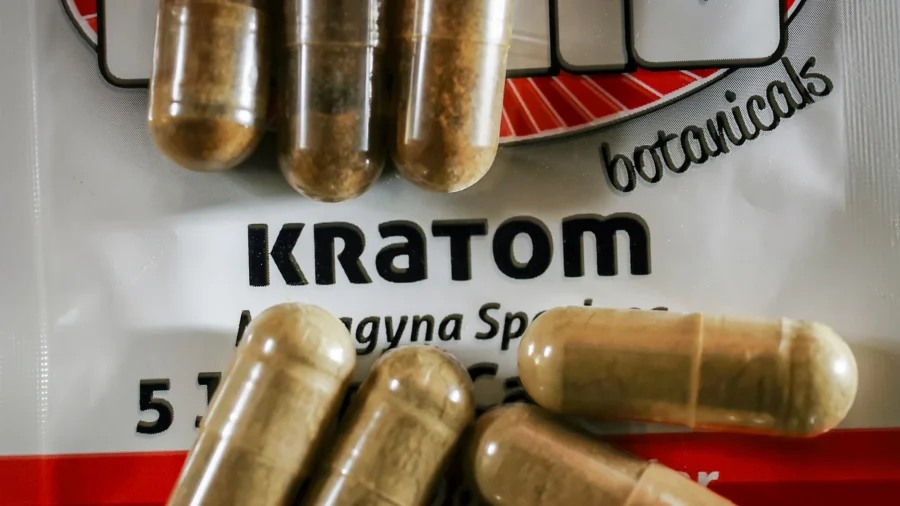
Calls to U.S. poison-control centers and hospitalizations involving kratom, a widely available herbal substance, each rose more than 1,000 percent over the past decade, new research reveals.
The findings, released by the University of Virginia Health System on March 26, notes a record-high 3,434 kratom-related reports to poison centers last year—up from 258 in 2015.
Researchers attribute this “marked jump” to kratom’s growing availability—particularly at places such as gas stations and vape shops—and “the increasing potency of new formulations.”
Several states and two federal agencies are considering how to address the substance; at least 30 states have enacted regulations or bans.
Proponents of kratom say they believe the botanical plant provides a safe, “natural” way to manage pain, boost mood, or ease opiate addiction. Opponents dispute those claims, pointing to personal stories and data about kratom-induced addiction, overdoses, illnesses, and deaths.
“Because these products are unregulated, buyers can’t be certain what their purchases may contain. Further, kratom itself has been linked to potential liver damage,” the Virginia news release says.
The researchers, led by Rita Farah, analyzed information from the National Poison Data System. They found that calls to poison centers “increased steadily from 2015-2019, plateaued from 2020-2024, then surged in unprecedented fashion in 2025.”
Dr. Chris Holstege, a researcher who serves as director of the Virginia health system’s Blue Ridge Poison Center, said the data show a “concerning trend.” More people are experiencing “serious complications associated with kratom products,” he said in a news release.
Holstege said the United States is seeing a “marked increase” in sales of kratom-associated products—which come in varying concentrations. The chemical components of kratom “have complex pharmacological actions and can cause drug interactions and adverse consequences in humans,” he said.
In 2025, 60 percent of cases with multiple substances had “serious medical outcomes,” and half required hospitalization, the researchers note in findings they published in the federal Centers for Disease Control and Prevention’s weekly bulletin.
The researchers reviewed more than 14,400 kratom exposures. Most involved men in their 20s and 30s. But the researchers also found “dramatic increases” in reports involving people ages 40–59, “suggesting more people are trying and using kratom.”
The Virginia researchers, citing their findings, called for increased scrutiny of kratom, and public-health education campaigns. People need to know that kratom “can have serious—even deadly—consequences, especially in combination with alcohol, medicines or illicit drugs,” the news release states.
Even by itself, kratom is causing its share of problems, data show.
“Hospitalizations linked solely to kratom” increased more than 1,150 percent during a 10-year span ending last year, the report said. In 2015, there were just 43 kratom-only hospitalizations; in 2025, there were 538.
When people combined kratom with other substances, ranging from illegal drugs to prescription antidepressants, hospital stays increased almost 1,300 percent, from 40 to 549 during the study period, the report says.
In addition, 233 people died from kratom use; all but 49 of those deaths involved multiple substances.
Kratom comes from a tropical evergreen tree that is native to Southeast Asia. Like its relative, the coffee plant, kratom can have stimulating or calming effects depending upon the quantity consumed.
However, kratom is far more complex. It contains dozens of alkaloids—naturally occurring compounds that can affect people’s minds and bodies.
People on both sides of the debate over kratom accuse the other side of profit motivations. Opponents often say kratom producers obscure or downplay risks so they can make money from an uninformed public, while many advocates of kratom allege that large pharmaceutical companies are trying to block use of an alternative to expensive, patented prescription drugs.