


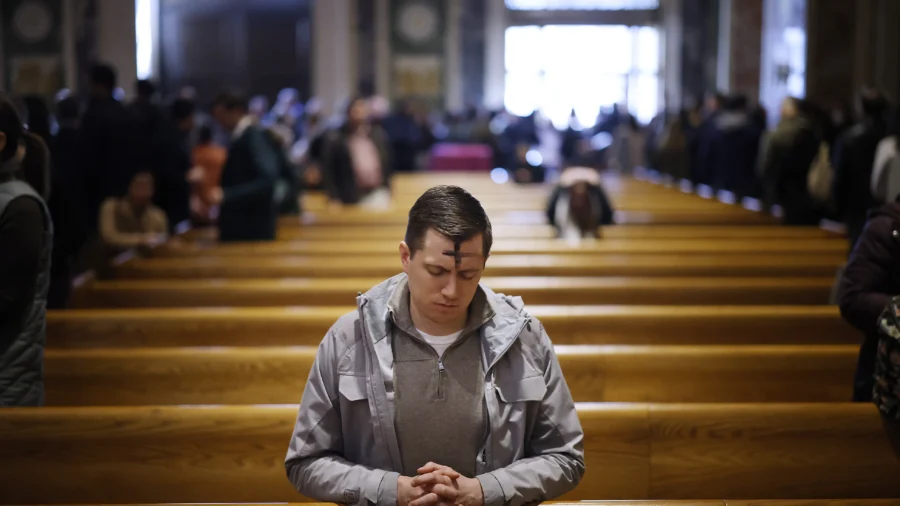
A majority of U.S. adults (65 percent) say they believe that it would be good for society if more Americans were religious, according to a poll by Gallup.
Gallup’s Values and Beliefs survey, released on June 16, found a substantial gap between the sexes, with 70 percent of men agreeing that more religiosity would be good for the country, compared with 61 percent of women.
By age grouping, the younger generations were least likely to agree, with less than half (49 percent) of 18- to 34-year-olds saying it would be good if more Americans had a faith, compared with 66 percent of 35- to 54-year-olds and three in four (75 percent) of those aged 55 and over.
In terms of political affiliation, the vast majority of Republicans (94 percent) thought that having more religious people would be better for the United States, followed by independents (59 percent), and Democrats (51 percent).
Proportion Down From 2013
While nearly two-thirds (65 percent) of Americans say that more religiosity would be good for the country, Gallup noted that this proportion is down from the 75 percent of U.S. adults who expressed the same opinion when asked by the polling firm in 2013.This 10-point shift reflects changes in opinion in most key demographic and political groups, mostly dramatically among women, 18- to 34-year-olds, those with some college, and Democrats—with all those groups shifting opinion by negative 16 points.
The only exceptions were Catholics (up 5 percent), those with no religious affiliation (up 3 percent), and Republicans (also up 3 percent).
The decline mirrors the decrease in religious sentiment across the United States.
Religion Increasing Influence
The latest survey also found that Americans see religion increasing its influence in life in the United States, with 39 percent of U.S. adults saying religion’s influence is on the rise. This is among the highest readings in the past two decades, only lower than 41 percent in December 2025 and 40 percent in September 2006.“The recent increase began after Republican Party victories in the 2024 elections, with the percentage climbing from 20 percent in May 2024 to 35 percent in December of that year,” Gallup said.
“The past two readings, from May and December, have been even higher since the GOP has been in office and governing.”
Commenting on the findings overall, Gallup said that “while Americans continue to believe a more religious society would serve the U.S. well, fewer hold this view than did in 2013.
“This shift has come as the percentage of Americans who are religious are, by nearly any measure, near historical lows.”
White House Faith Office
In February 2025, President Donald Trump signed an executive order establishing a White House Faith Office.
“Religion is back, now, hotter than ever before,” Trump said in his speech at the Washington Hilton on Feb. 5.
“Thankfully, as we gather today, there are many signs that religion is coming back. Now, it’s no longer signs.
“It’s just coming back; it’s coming back so strong. You know, your churches are filling up.”