


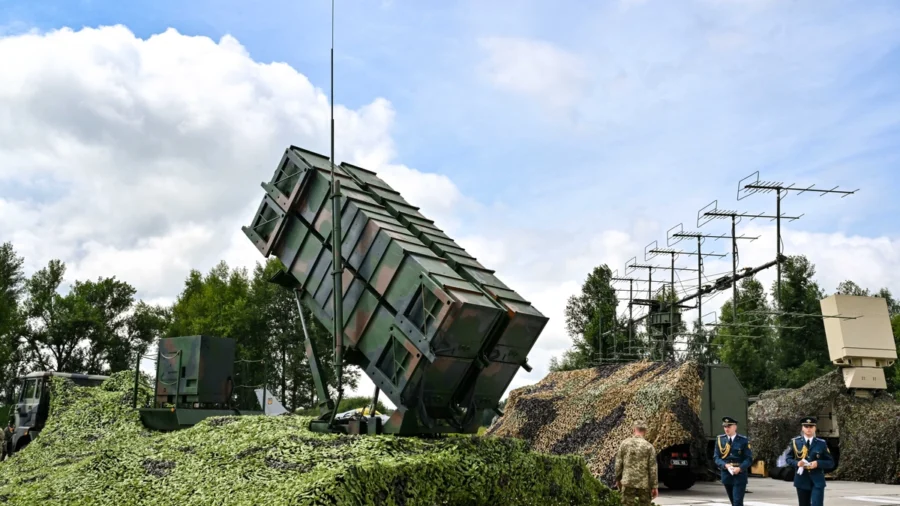
Allies have supplied just a third of the missile interceptors sent to Kyiv so far this year compared with 2025, Ukrainian President Volodymyr Zelenskyy said on Aug. 5, as Russia escalates strikes against Ukraine.
“Unfortunately, supplies of anti-ballistic capabilities from partners have decreased significantly this year,” Zelenskyy posted on X.
“The number of air defense missiles supplied has dropped threefold compared with 2025. And this concerns not only this summer period, but every period of the first half of 2026.”
The Ukrainian president said it was necessary that political decisions continue to be made to ensure regular supply and acceleration of production processes of interceptor missiles, which he said was not only significant for the support of Ukraine, “but also to the global protection of life.”
The president said Russian forces had sent 24 ballistic missiles, four hypersonic Zircons or supersonic Oniks, and another 115 drones, “a significant number of them jet-powered.”
“Ballistic missile interceptors could have saved the lives of those killed today,” Zelenskyy said, calling on international partners to understand that delays to providing anti-ballistic systems “lead directly to such horrific casualties and destruction.”
Ukrainian Interceptor Project
The Ministry of Defense of Ukraine, in an update on the situation on the front line, said that last month Russia had stepped up its air attacks.A statement from the ministry said that according to the air force, 7,922 combat engagements were recorded in July—an average of more than 250 engagements every day, and higher than the 7,316 recorded in June.
It also said the Russian army had used more than 8,300 aerial bombs fitted with universal glide and correction modules, “the highest number recorded to date.”
“It’s a very extraordinary weapon, and ... we have to be a little bit careful of who we license to. We don’t really license equipment,” Trump said.
Ukrainian arms manufacturer Fire Point produces the FP7.X interceptor for the Ukrainian government project, codenamed Project Freyja.
Iryna Terekh, Fire Point’s CEO, told Reuters in an interview published on Aug. 4 that her company had secured agreements with more than a dozen European defense companies for radar, guidance, and other systems and is starting to integrate the technologies into the system.
Terekh said her company will be able to conduct its first successful interception with the system by mid-2027.