


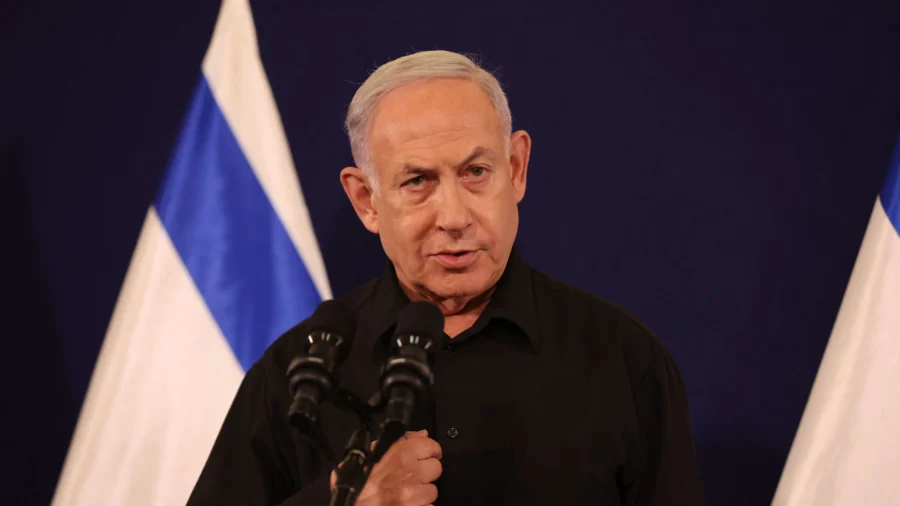
Israeli Prime Minister Benjamin Netanyahu on Wednesday signaled his country is readying to intensify military action along its northern border with Lebanon as Israel continues to skirmish with Hezbollah.
Israel's northern military forces have been fighting with Hezbollah for months. The designated terrorist group—which is also organized as a political entity within the Lebanese government—has intensified attacks near the Lebanese border since October, as much of Israel's military forces have focused south toward their ongoing military campaign in the Gaza Strip against Hamas; another U.S. and Israeli-designated terrorist group.
Israeli authorities believe a Hezbollah rocket strike set off fires that spread throughout Kiryat Shmona this week, burning hundreds of acres of land. Mr. Netanyahu surveyed the recent destruction during his Wednesday visit and addressed Israeli troops and local firefighters who have worked together to battle the blaze.
"Yesterday the ground burned here and I am pleased that you have extinguished it," Mr. Netanyahu said. "But ground also burned in Lebanon."
The Israeli prime minister reiterated that he would not fail to respond to Hezbollah's attacks.
"Whoever thinks he can hurt us and we will respond by sitting on our hands is making a big mistake. We are prepared for very intense action in the north. One way or another, we will restore security to the north," he said.
Netanyahu Allies Call to Send Israeli Troops Into Lebanon
While Mr. Netanyahu's office did not specify any new military actions in the north in the Wednesday press statement, members of Mr. Netanyahu's cabinet have suggested Israeli forces should take more expansive measures to defeat Hezbollah, including creating a security zone inside Lebanon's borders.President Joe Biden's administration, by contrast, has sought to avoid the Israel-Lebanon border skirmish expanding into a broader conflict.
Mr. Miller said the Biden administration is hopeful that a ceasefire deal in the Gaza Strip will also bring calm on Israel's northern border, allowing for both Israeli and Lebanese civilians to return to their homes on either side of the border.