


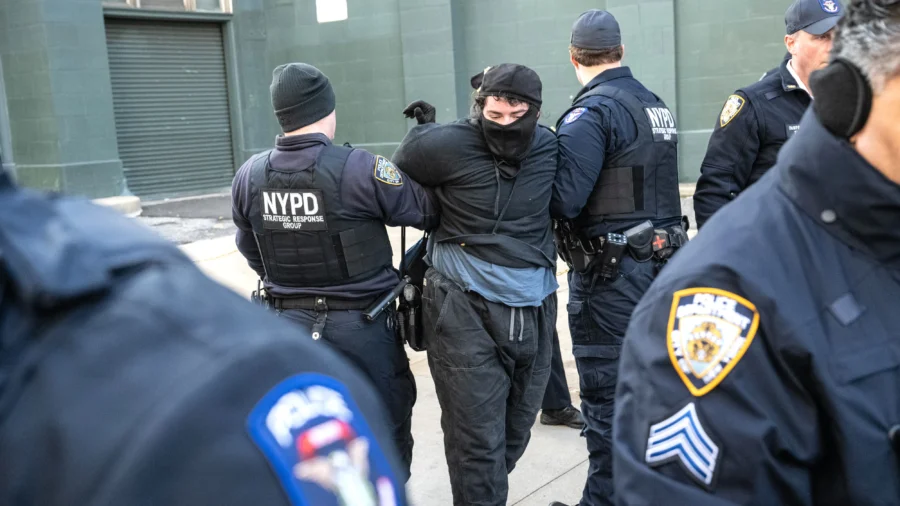
New York’s law prohibiting local, state, and federal law enforcement officials from wearing masks while on duty took effect on Friday.
New York Gov. Kathy Hochul suggested on a social media post that the new law strikes an appropriate balance between protecting residents' rights and preserving law enforcement's authority.
New York Attorney General Letitia James echoed that sentiment.
Both officials claimed that masked and unidentified agents across the country have made it harder for residents to know who is acting under color of law, report misconduct, and seek accountability when officers abuse their authority.
They cited last year's operation on Canal Street in New York City in which masked agents “terrified” residents and created chaos in the community, according to Hochul and James.
The Department of Justice filed a lawsuit challenging their “unconstitutional attempt” to regulate federal law enforcement officers who enforce the nation’s laws.
"Law enforcement officers risk their lives every day to keep Americans safe, and they do not deserve to be doxed or harassed simply for carrying out their duties," Acting Attorney General Todd Blanche said in a statement. "New York’s anti-law enforcement policies regulate the federal government and are designed to create risk for our agents. These laws cannot stand."
DOJ officials argued that allowing officers to remain masked helps protect them and their families from potential retaliation, including harassment, exposure of personal information, and threats of violence.
The administration has maintained that the law could undermine federal law enforcement efforts by revealing agents’ identities during sensitive operations and investigations.
The DOJ plans to contest additional parts of state law that require officers to identify themselves and limit certain local partnerships with federal immigration authorities, arguing that those measures improperly interfere with federal responsibilities.
According to Hochul, an agreement had been reached in May with state lawmakers on the state's 2027 budget, which included sweeping immigration changes. Under that agreement, state law enforcement will be prohibited from working with ICE on federal immigration efforts. It will also ban ICE from entering schools, health care facilities, homes, and other sensitive locations without a judicial warrant.