


For the week ending Nov. 29, continuing jobless claims declined by 99,000 to 1.838 million—the lowest reading since early April. This is down from the previous week's downwardly revised 1.937 million.
Market watchers had penciled in a reading of 1.95 million.
Economists have closely examined this measure to assess the challenges that out-of-work individuals face in finding new employment.
The common refrain of a "low hire, low fire" environment has led employees to be more cautious before submitting their resignation letters, with fewer workers stepping down from their positions.
Job quits declined to 2.941 million in October, the lowest level since August 2020. Additionally, the quits rate—a gauge of the share of workers who voluntarily leave their jobs—slipped to 1.8 percent.
Echoing Federal Reserve Chair Jerome Powell's description of a "curious kind of balance," Indeed hiring lab economist Cory Stahle said today’s labor market is "stuck."
Meanwhile, volatility is being seen in the number of Americans filing for first-time unemployment benefits.
The four-week average, which strips out week-to-week volatility, ticked up to 216,750 from 214,750 in the previous week.
An initial claims program for federal workers registered further easing, declining by 483, to 643.
A Cool Breeze in the Labor Market
Monetary policymakers have acknowledged that the U.S. labor market is cooling.In its post-meeting statement on Dec. 10, the Fed deleted the term "low" when describing the unemployment rate, which sits at 4.4 percent.
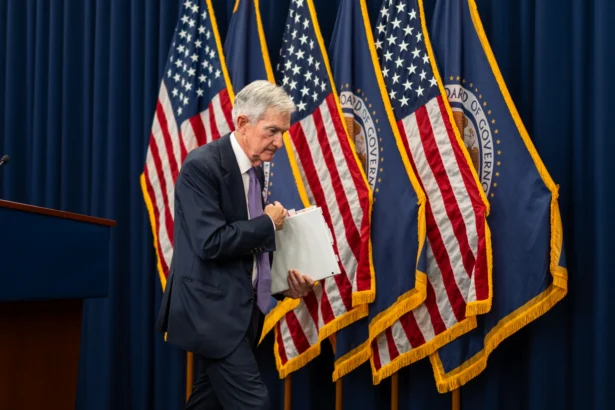
While there will be an influx of employment and inflation data ahead of the January policy meeting, Powell said the institution will use a "skeptical" eye to assess the figures.
"We're going to get data, but we're going to have to look at it carefully and with a somewhat skeptical eye," Powell told reporters. "We will have a lot of the December data by the time of the January meeting. So we expect to see a lot more."
The October and November jobs reports will be published on Dec. 16, and the November consumer price index report will be released on Dec. 18.
"Where do they see the risk to balancing their dual mandate—does it switch more to inflation from labor?" Jay Woods, chief market strategist at Freedom Capital Markets, said in a note emailed to The Epoch Times. "They see inflation easing to 2.5% next year, so that’s a positive. They referred to the job market and unemployment edging up, and did not refer to it as low."
Assuming no new major tariff announcements, Powell believes inflation will peak in the first quarter, noting that higher import duties have caused inflation to "overshoot."
The next two-day Fed meeting will take place on Jan. 27 and 28.