


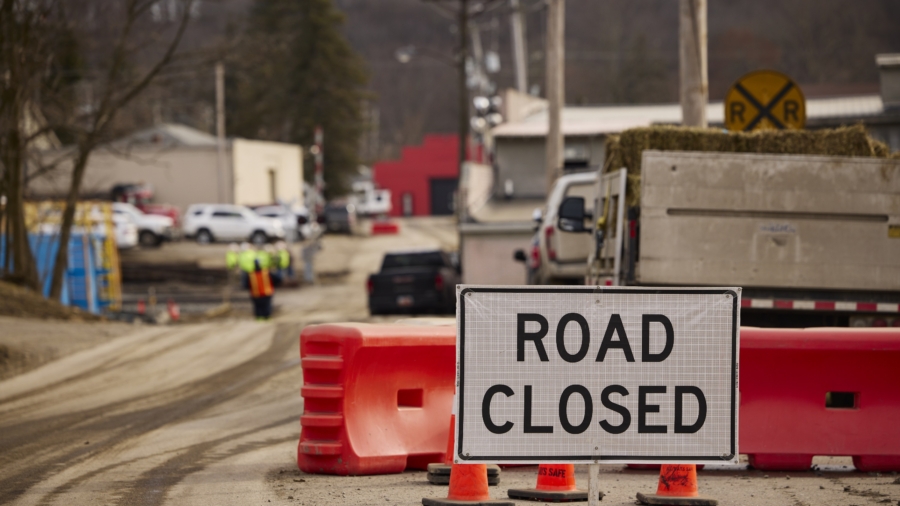
Security camera footage has emerged showing that the Ohio train that derailed in East Palestine may have been on fire for 20 miles before it finally went off the tracks and burst into flames.
As the train passes the plant, what looks like flames and sparks can be seen in the video underneath the train cars.
The National Transportation Safety Board (NTSB), which is investigating the derailment, appeared to reference the video—and others—at a news conference in the days immediately after the incident took place on Feb. 3.
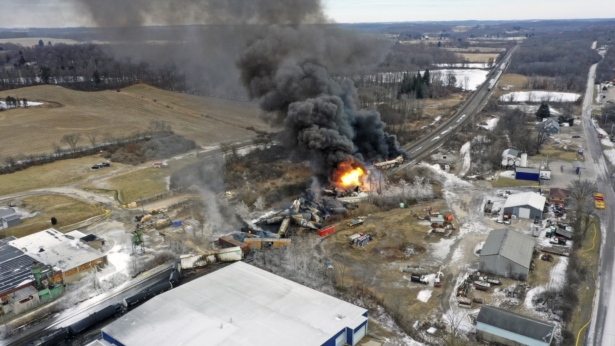
‘Mechanical Issues’
At a follow-on briefing on Feb. 5, Graham said that investigators had also secured the locomotive data recorder earlier that day, along with forward- and inward-facing camera footage and audio recordings.Graham said the locomotive footage would be sent to a Washington lab for evaluation and analysis, before adding that other videos have emerged suggesting a possible problem with one of the rail car’s axles.
Graham said the train crew received an alarm from a “wayside defect detector shortly before the derailment, indicating a mechanical issue.”
“Then an emergency brake application initiated,” he continued, adding that a preliminary investigative report was expected within several weeks, though a full probe could take as long as 24 months.
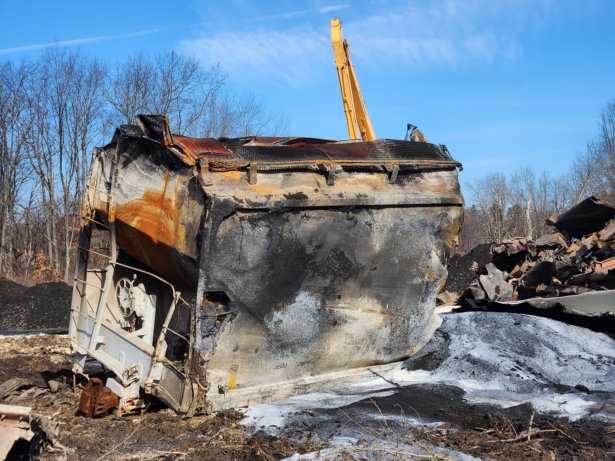
“The wheelset from the suspected railcar has been collected as evidence for metallurgical examination,” the NTSB stated.
Investigators have found the suspected overheated wheel bearing, and engineers from the NTSB Materials Laboratory in Washington would examine it.
The NTSB added that a preliminary report would be issued within two weeks.
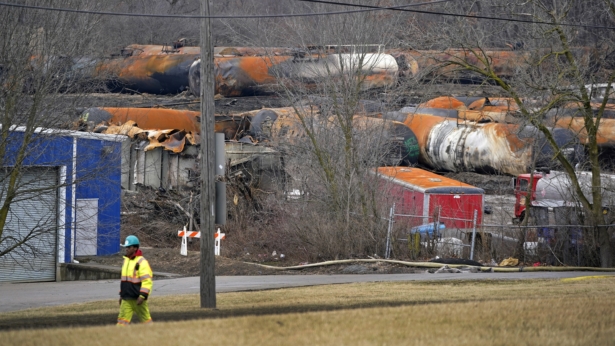
Investigators will complete their examination of the 11 tank cars that contained hazardous materials once they’re fully decontaminated, the NTSB said.
Chemical ‘Plume’ Floating Down Ohio River
A total of around 50 train cars derailed in East Palestine on Feb. 3, with some containing the toxic chemical vinyl chloride, which at high concentrations can be deadly.Short-term exposure to the chemical can cause dizziness, headaches, and respiratory problems. Long-term exposure has been linked to various health problems, including liver damage, immune system dysfunction, and certain types of cancer.
The derailment prompted evacuation orders in East Palestine, a town of around 5,000.
The wreckage burned for days, and officials worried that the highly-flammable vinyl chloride could lead to an uncontrolled explosion, so crews engineered controlled detonations.
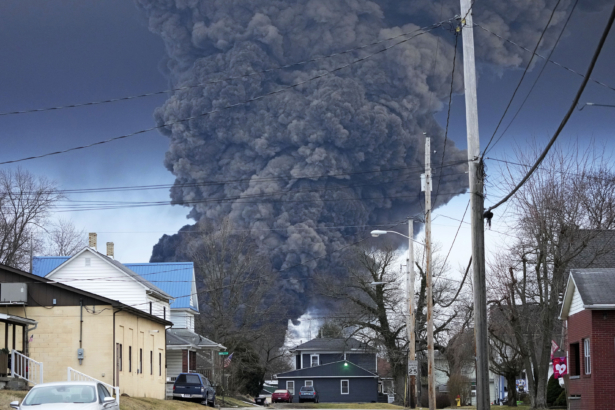
Besides being burned off in a controlled fashion, contaminants from derailed cars also spilled into waterways, with officials tracking a large “plume” of chemicals flowing down the Ohio River.
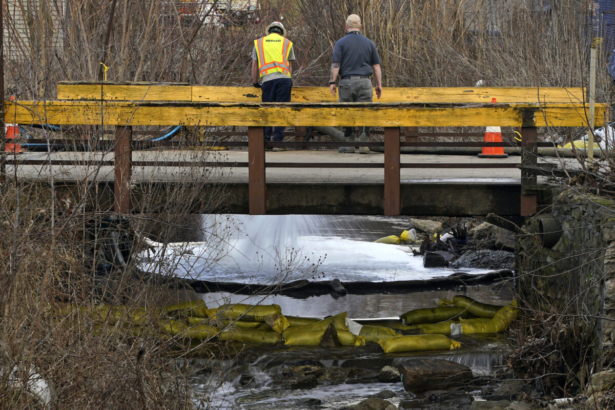
Around 3,500 fish have been killed by the chemical spill, according to an estimate by the Ohio Department of Natural Resources, with around 7 miles of streams affected by the toxins.
Kavalec said that the plume is moving downriver at around 1 mph and becoming increasingly more diluted, adding that the Ohio EPA doesn’t believe the chemicals pose a threat to drinking water.
The Ohio River is “able to dilute the pollutants pretty quickly,” Kavalec said, adding that “we are seeing very low levels of contaminants” in the river.
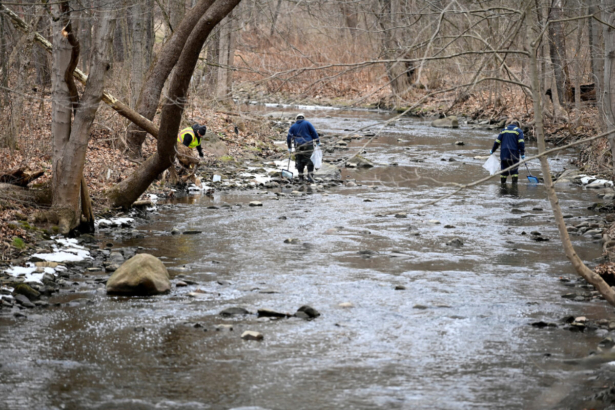
The EPA said that water sampling is being carried out at various points along the river to ensure drinking water is safe.
Bottled Water Advisory
Ohio officials have urged some locals living near the train derailment site in East Palestine to only use bottled water amid concerns over the potential health impacts of hazardous chemicals that spilled into the Ohio River.Ohio Gov. Mike DeWine told a press conference on Tuesday that the pollution did not pose a serious threat to the 5 million or so people who rely on the Ohio River for their drinking water.
Still, DeWine and other Ohio officials warned that residents using private wells near the derailment should only use bottled water.
“For right now, I think bottled water’s the right answer,” Ohio Health Director Bruce Vanderhoff said at the press conference.
Asked by reporters whether he would return home amid cleanup efforts, DeWine said he’d be back home but would not be drinking water from the tap.
“I would be alert and concerned,” he continued, adding, “But I think I would probably be back in my house.”
DeWine said on Feb. 8 that it was safe for local residents to return to their homes.
Lingering Questions
People in and around East Palestine have been asking whether the air and water are safe for their families, pets, and livestock after the derailment caused a fire that sent a cloud of toxic smoke over the town.The EPA has been carrying out community air monitoring in East Palestine around the clock, saying in Tuesday’s update that it has “not detected any levels of health concern in the community that are attributed to the train derailment.”
As of Tuesday, the agency had screened 396 homes, and “no detections of vinyl chloride or hydrogen chloride were identified,” the EPA said.
But while the EPA has said that air monitoring hasn’t detected any hazards to health associated with the derailment, some locals have told media outlets that their health has suffered since returning home.