


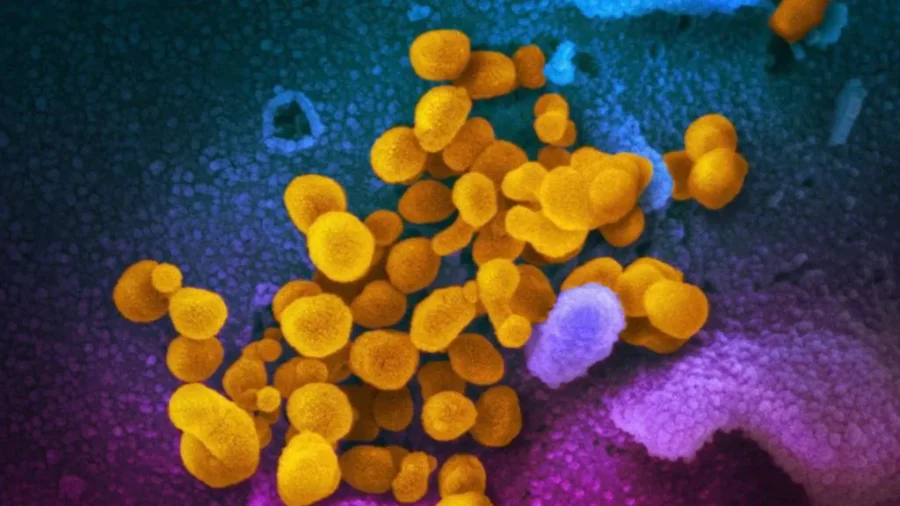
COVID infections are now increasing in all 50 states, up from 37 states three weeks earlier. The Centers for Disease Control and Prevention (CDC) said infections were “growing or likely growing” in every state in its last update, as of Aug. 12. On July 22, the agency classified infections as growing or likely growing in 37 states and unchanged in 11.
The CDC uses emergency department visits and other health information to estimate whether infections are increasing or decreasing.
The increase appears strongest in the West and South, according to the CDC. Meanwhile, for many areas across the country, COVID activity remains low, and the overall number of people seeking medical care for respiratory illnesses was “very low” as of Aug. 14.
Wastewater data provides another measure of community spread. The CDC classified national COVID wastewater activity as “very low” for the week ending Aug. 8, despite increases in several parts of the country. The agency showed most states at very low or low levels.
Other indicators point to a modest increase in illness. COVID is projected to account for 0.43 percent of emergency department visits during the week ending Aug. 22, up from 0.31 percent during the week ending Aug. 8, according to CDC forecasts. New hospital admissions are expected to reach about 2,400, compared with 1,800 reported for the previous week.
Several variants, including XFG and BA.3.2, are circulating globally, according to the World Health Organization (WHO). Both are listed as variants under WHO monitoring.
XFG, nicknamed “Stratus,” is an Omicron descendant first documented in a sample collected in Jan. 2025. It later became the most common variant among sequences reported globally before its share began declining. The variant spread widely in Southeast Asia and became dominant in India during spring 2025.
BA.3.2, also called “Cicada,” was first identified in a respiratory sample collected in South Africa in Nov. 2024. Its share later increased in several countries. The first U.S. detection came in June 2025 from a traveler arriving from the Netherlands, while the first U.S. clinical case was detected in January 2026.
Older adults, people with weakened immune systems, and those with underlying health conditions are at greatest risk for severe illness, the CDC said. The CDC recommends antiviral treatment begin within five to seven days of symptom onset for those at higher risk.
Globally, countries reported 6,849 COVID-19 cases to the WHO during the week ending Aug. 2, down 3,880 from the previous week, according to the most recent data on the WHO site.
Thailand reported the most new cases with about 5,800, followed by Brazil with 316, Greece with 169, Colombia with 156, and Mexico with 98. Nearly 779.3 million cases have been reported worldwide since COVID-19 emerged, according to the WHO COVID-19 dashboard.