


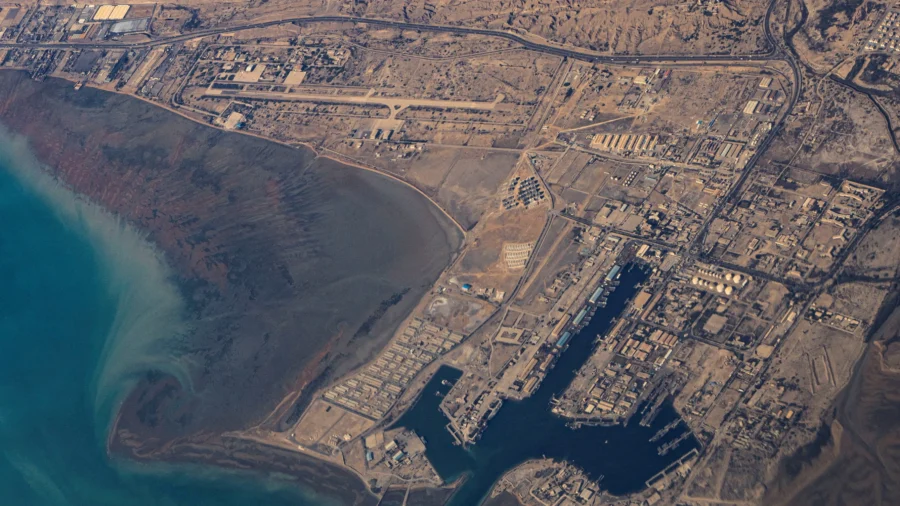
A barrel of West Texas Intermediate—the U.S. benchmark for oil prices—declined almost 16 percent to around $95 on the New York Mercantile Exchange.
Crude prices had plunged as much as 19 percent before paring their losses.
The president said in a social media post that the two-week ceasefire was contingent on Iran agreeing to safe passage through the Strait of Hormuz, a vital and narrow artery for the transportation of oil and natural gas.
"Based on conversations with Prime Minister Shehbaz Sharif and Field Marshal Asim Munir, of Pakistan, and wherein they requested that I hold off the destructive force being sent tonight to Iran, and subject to the Islamic Republic of Iran agreeing to the complete, immediate, and safe opening of the Strait of Hormuz, I agree to suspend the bombing and attack of Iran for a period of two weeks," Trump said in a Truth Social post more than an hour before his 8 p.m. EST deadline.
Iranian Foreign Minister Seyed Abbas Araghchi also agreed to the temporary ceasefire.
“If attacks against Iran are halted, our Powerful Armed Forces will cease their defensive operations,” Araghchi said in a statement posted to social media.
“For a period of two weeks, safe passage through the Strait of Hormuz will be possible via coordination with Iran’s Armed Forces and with due consideration of technical limitations.”
Equities also cheered the two-week pause, with leading benchmark indexes rallying in after-hours trading.
The blue-chip Dow Jones Industrial Average soared as much as 1,000 points. The tech-driven Nasdaq Composite Index surged nearly 700 points, while the broader S&P 500 added more than 100 points.
Stocks wobbled throughout the trading session as traders were unsure if Washington and Iran would reach a deal.
What Lies Ahead
This, market watchers say, does not mean stocks or energy markets will return to normal.The largest factor in the coming months will remain the Strait of Hormuz, which handles approximately 20 million barrels of oil and petroleum products a day.
“Presumably at the end of the war, the strait will open back up, and you’ll see oil and gas prices, non-U.S. gas prices, come down,” Simon Lack, portfolio manager at Catalyst Funds, said in a note emailed to The Epoch Times.
"You’re going to see energy security playing a much bigger role for buyers because of the disruption we’ve gone through. That’ll be a bias toward U.S. suppliers."
Heating oil futures also tanked 17 percent to below $3.72 a gallon.
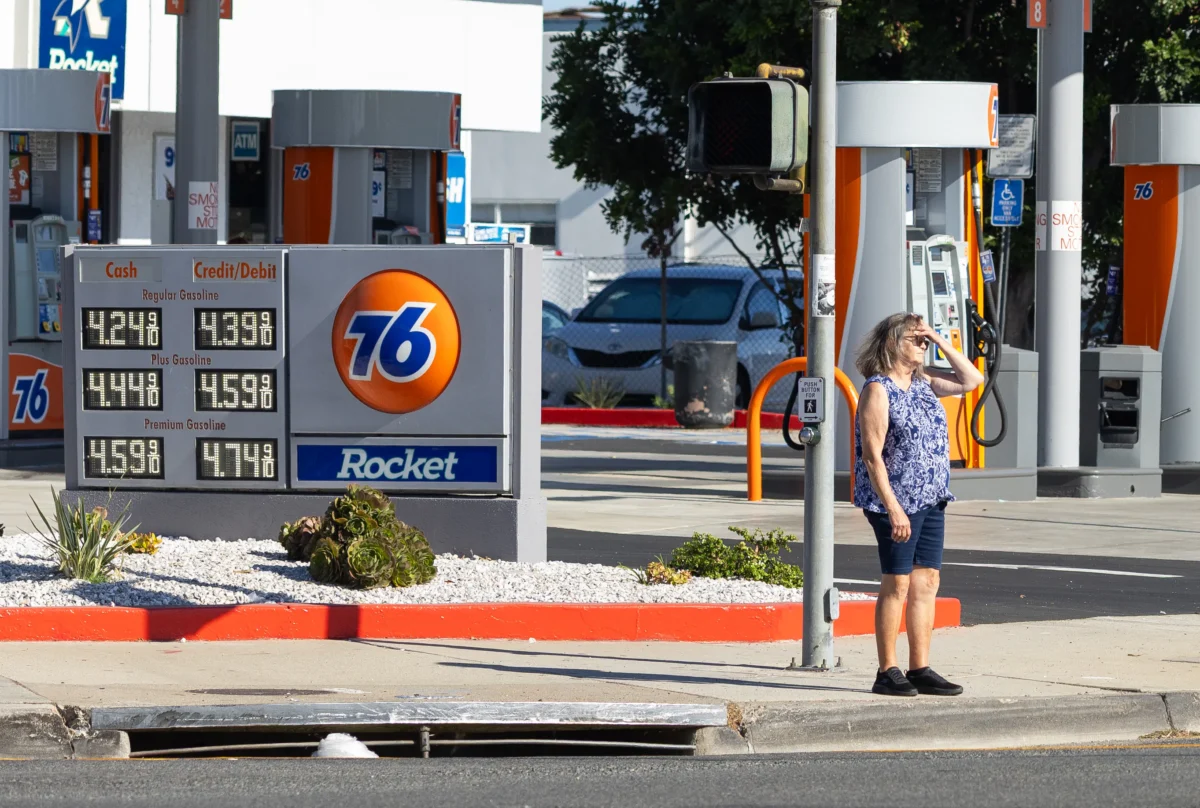
Despite the sizable drop, motorists are still likely to face higher gasoline prices due to the "rockets and feathers" asymmetrical price transmission.
When crude oil prices soar, gas stations are quick to raise pump prices to cover the higher cost of their next shipment. Conversely, when oil prices fall, a gallon of gasoline will decline more gradually to protect margins and clear out older, more expensive inventory.
As of April 7, the national average price for a gallon of gas is firmly above $4.
Lack noted that if oil prices continued to edge higher from their earlier levels, recession risks would intensify across the global economy.
“Energy prices being higher at this level is good, but if we see oil go up above, for example, $200, that will probably cause a recession in most of the world. That would be a bad outcome,” he said.
Gold, Bitcoin, and Dollars
Other assets welcomed the U.S.-Iran de-escalation.Gold and silver futures climbed 4 percent and 6 percent, respectively. Bitcoin rose 3 percent to nearly $72,000.
Long-term Treasury yields eased, with the benchmark 10-year sliding to 4.27 percent. The 20- and 30-year yields slowed to around 4.85 percent.
The greenback's risk premium faded.
The U.S. Dollar Index—a measure of the buck against a weighted basket of currencies—fell about 0.9 percent. The dollar had been one of the world's top-performing assets as investors sought shelter in the conventional safe-haven vehicle during the six-week-old conflict.