


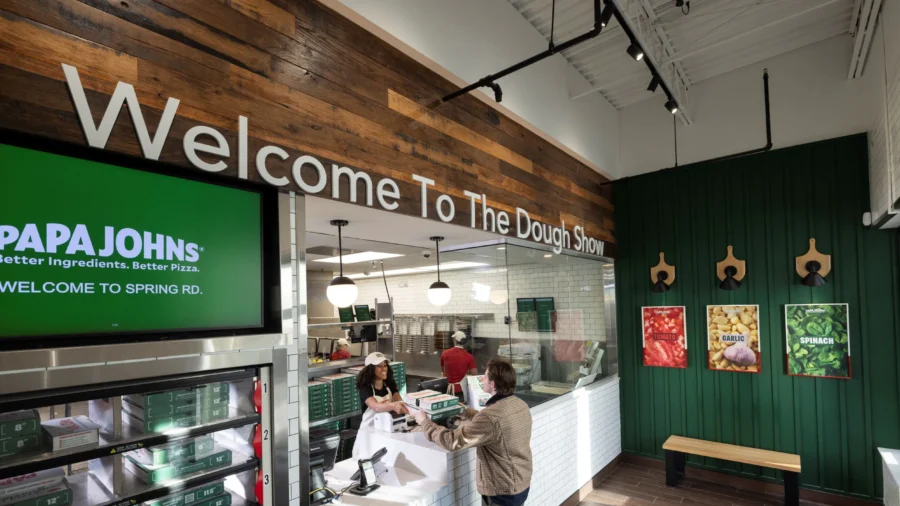
Papa John’s announced it will be closing some 300 restaurants by the end of 2027.
“These locations are primarily franchise-owned, over a decade old, generate AUVs of under $600,000, and mostly operate at negative 4-wall EBITDA,” Thanawala said.
AUV is the average unit volume, which represents the average annual revenue generated by a franchise unit.
Papa John plans to close 200 locations by the end of this year, with an additional 100 storefronts scheduled to close by the end of 2027.
“The vast majority of our global restaurants have performed well over the years and delivered strong returns for both corporate and franchise owners,” Thanawala said.
Their pizza is marketed as being a better choice because of better ingredients.
“We have identified approximately 300 underperforming restaurants across North America that are not meeting brand expectations or lack a clear path to sustainable financial improvement, as well as locations where we can effectively transfer sales to nearby restaurants,” Thanawala added.
Company leaders said new stores would be opening, but declined to reveal which Papa John's stores would close and in what states.
"We do not currently have a list of specific restaurants that could potentially be included in the closures," Papa John's senior communications manager Harrison Sheffield told NTD. "I can’t give you a number of restaurants that will be open at a future date, given the fact that other restaurants will have opened within that time period."
Last month, another global chain of pizzerias announced it was closing up to 250 locations during the first half of 2026.
Yum Brands Inc., parent company of Pizza Hut, noted the closures of its underperforming locations globally during a Feb. 4 earnings call and said it expects Pizza Hut’s first-quarter core operating profit to decline about 15 percent as a result of costs tied to restructuring.
The consolidation of the restaurant industry is what restaurant job platform OysterLink co-founder Milos Eric blames for the closing of so many pizzerias.
“It’s not a transition away from pizza,” Eric told NTD. “Americans still love pizza. Margins have shrunk so much that restaurants that just get by are no longer tolerated by operators.”
Another factor hurting the chain and franchise pizzerias is the number of small artisan pizzerias that have sprung up in almost every city, according to Absolute Marketing Solutions' chief brand strategist Alfred Goldberg.
"My family have personally stopped ordering from the large brands and tend to frequent small and independent pizzerias these days," Goldberg told NTD.