


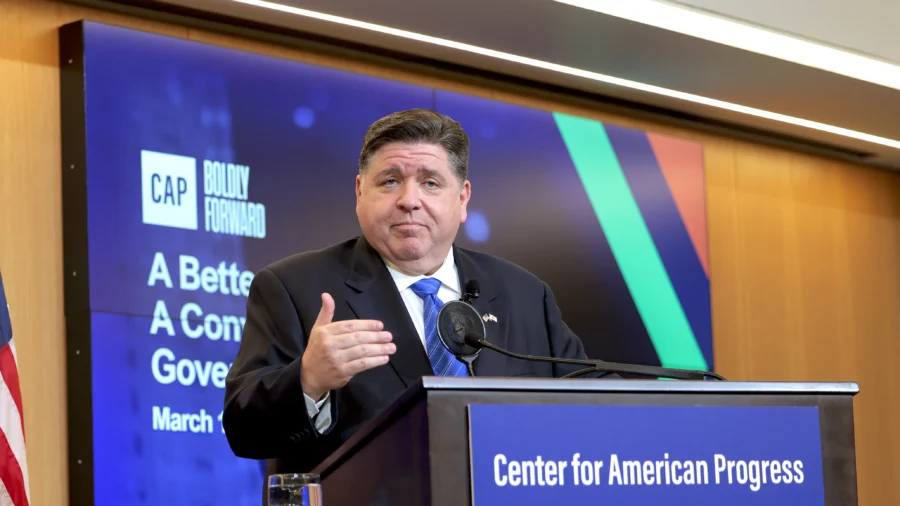
Illinois Gov. JB Pritzker on Wednesday signed an executive order that he said will protect the medical data of residents in his state amid plans by the Trump administration to create a national autism database.
The executive order restricts the unauthorized collection of autism-related data, which Pritzker said in a statement is needed to protect Illinoisans' dignity, privacy, and freedom.
“We are taking steps to ensure that our state remains a leader in protecting the rights of individuals with autism and all people with disabilities," Pritzker said.
Specifically, the executive order says that no state agency is allowed to disclose personally identifiable autism-related data to any entity outside the state government unless there is a court order, legal consent, or medical necessity.
The order is in response to Health and Human Services (HHS) Secretary Robert F. Kennedy Jr’s. plans to undertake a "massive testing and research effort" to determine the root causes of autism, a developmental disability caused by differences in the brain. That plan involves a data-sharing agreement between the National Institutes of Health and the Centers for Medicare and Medicaid Services, which has access to claims data from nearly 150 million Americans across the country.
Pritzker has asserted that the program doesn't have any clear legal safeguards or accountability.
Kennedy says it will be voluntary and adhere to applicable privacy laws. Researchers would use the data to focus on autism diagnosis trends, including responses to various treatments and access to care based on demographics and geography.
To note, there has been some controversy over what to call it. Initially the term “autism registry” was used, but after concerns were raised about misuse, Kennedy clarified on April 25, that the goal is to create a “real-world data platform” or database, to link existing datasets for research, similar to what already exists for cancer and other diseases.
The project is part of a wider $50 million research effort Kennedy is launching to identify the causes of autism.
"We're pulling back the curtain, with full transparency and accountability, to deliver the honest answers families have waited far too long to hear," Kennedy said on May 7.
The HHS secretary has often highlighted rising autism rates in the United States. A new report by the Centers for Disease Control and Prevention (CDC) estimated that one in 31 U.S. children has autism, an increase from one in 150 in 2000. Kennedy calls the increase an "epidemic" and says it must be caused, in large part, by an environmental toxin, since genetics alone can't account for it.
Some experts have argued that personal medical records aren't needed to get answers on the causes of autism.
“Enough research has been done at this point to know there is no simple magic bullet,” according to Helen Tager-Flusberg, professor emerita at Boston University and leader of the Coalition of Autism Scientists, adding that other research is needed, such as genetics and prenatal factors.
The Autism Self Advocacy Network says it recognizes the value of a database, but the lack of details so far “raises red flags.”
"We don’t know who will be included. We don’t know how (or if) consent will be obtained from participants. We don’t know who will have access to the data or how it will be used. Typically, the answers to these questions are articulated at the beginning of a project, but that has not been the case in this instance," the organization stated.
The new platform will first focus on research around the root causes of autism, HHS said, and ultimately link data for research on other chronic conditions. The database is one of the first steps in Kennedy's stated mission to find the causes of autism. He expects initial findings to be released in September.
Reuters and The Associated Press contributed to this report.