


U.S. firms captured a record $244 billion in foreign government procurement contracts in 2025, aided by the Department of Commerce, the International Trade Administration said on Jan. 23.
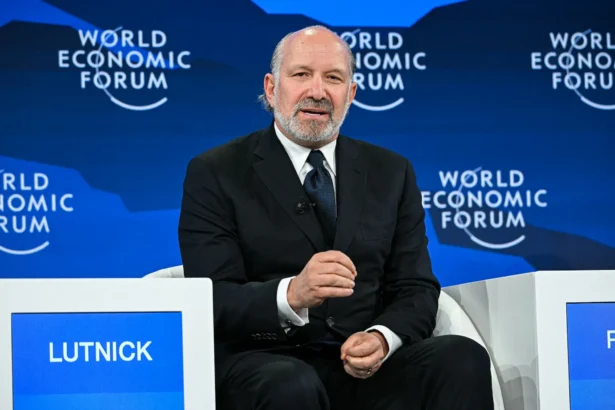
Businesses were able to secure these deals partly due to President Donald Trump’s trade deals, says Commerce Secretary Howard Lutnick.
“We are laser-focused on promoting investment, manufacturing, and new opportunities for American companies and workers. While 2025 was historic, it was just the beginning.”
The total value of contracts also represented a sizable increase compared to the first year under the previous administration.
In 2021, the value of contracts signed with advocacy support reached just $17 billion.
The International Trade Administration’s Assistance Center helps U.S. businesses pursue foreign government procurement opportunities and regularly facilitates meetings between foreign officials and top U.S. leaders, drawing on resources from several federal agencies.
Last year’s 121 contracts, meanwhile, contained $206 billion U.S.-made export content, supporting approximately 844,000 American jobs.
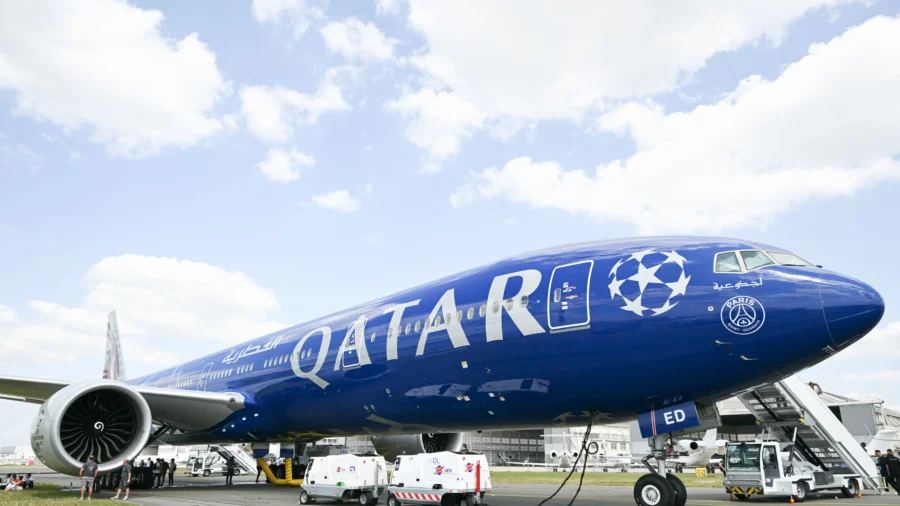
Civilian aerospace sales were the primary driver of the record total, accounting for an estimated $215 billion. The figure reflects major transactions such as Qatar’s purchase of Boeing wide-body jets and GE Aerospace jet engines.
Kelly Ortberg, president and CEO of The Boeing Company, lauded the White House for its work to bolster U.S. companies in global markets.
“Commerce’s support to Boeing was a differentiator in our achievement of record deals in 2025,” Ortberg said in a statement.
“Its Global Markets and Foreign Commercial Service teams were champions for U.S. aerospace exports, providing timely advocacy and insightful recommendations that advanced U.S. jobs and manufacturing.”
The defense industry garnered more than $10 billion in contracts, including defense hardware and systems. The energy sector generated $7 billion in contracts relating to crude oil, natural gas, nuclear, and power generation.
More than $8 billion in global infrastructure and supply chain projects were also created, ensuring the United States can access critical minerals, mines, ports, and rail.
This occurred shortly after a phone call between Trump and Kazakhstan’s President Kassym‑Jomart Tokayev.
Global Trade Pursuits
A key objective behind the current administration’s economic agenda is to bolster U.S. goods and services in the global marketplace, effectively rebalancing worldwide commerce.Over the past year, American exports have enjoyed a boost, driven by a mix of the president’s tariff agenda and a weaker U.S. dollar.
Since the president unveiled the contours of his sectoral and reciprocal tariffs in April, he has secured multiple trade agreements with various markets, including the United Kingdom, the European Union, and Asian countries.
These pacts include provisions to bring more American products to the world, including agricultural, automotive, and energy.
The Nominal Broad U.S. Dollar Index—a measure of the greenback against the currencies of major trading partners—has declined 7 percent over the past 12 months.
A lower dollar makes American goods more appealing to foreign markets. At the same time, it weakens the purchasing power of importers buying foreign products.