


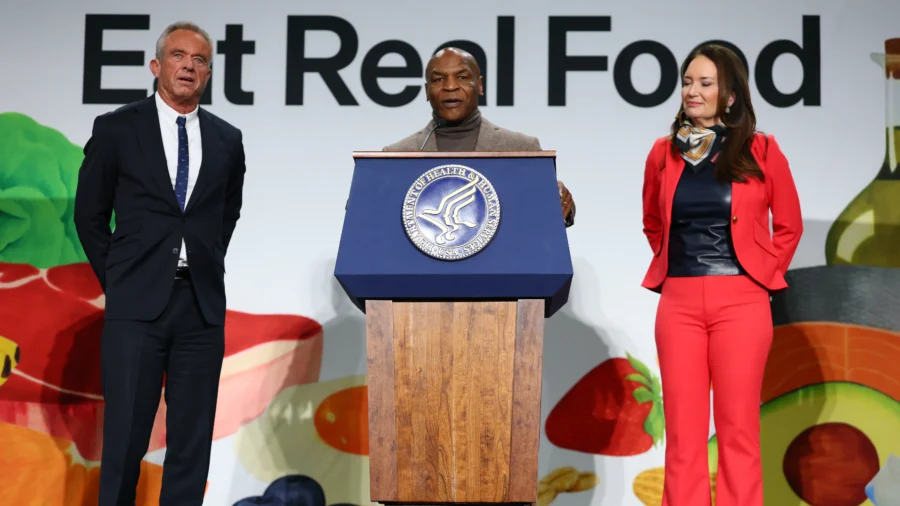
Health and Human Services Secretary Robert F. Kennedy has encouraged Americans to “eat real food” as part of his objective to address what he has called the nation’s chronic disease epidemic. Reinforcing that message, he announced the launch of a new cooking show “designed to help Americans make healthy and affordable meals using real everyday ingredients.”
Each episode of “The Real Food Show” will combine “simple recipes with the science behind them, translating the new Dietary Guidelines for Americans into meals that Americans can prepare in their own kitchens,” according to a July 30 HHS press release.
In a video he posted to YouTube on July 30, Kennedy said, “Thanks to President Trump, we flipped the food pyramid and put real food back where it belongs: at the center of the American plate.
“I’m traveling across America, connecting with renowned chefs to show families how to cook delicious, nutritious meals with real ingredients, and all at affordable prices,” he said. “America, it’s time to eat real food. Let’s get cooking.”
Just as “MAHA,” or Make America Healthy Again, became a familiar term when Kennedy became HHS secretary in 2025, “eat real food” emerged as messaging to describe the dietary guidelines earlier this year.
“The new guidelines recognize that whole, nutrient-dense food is the most effective path to better health and to lowering health care costs,” Kennedy said at a Jan. 7 press conference when the new dietary guidelines were introduced.
“The Real Food Show” is intended to show Americans how to eat healthy at home in a cost-effective way.
“The simple act of preparing and sharing a meal has always brought families and communities together,” Kennedy said.
“The Real Food Show reminds Americans that healthy eating starts at home—and that cooking with real food can be simple, affordable, and within reach for every family. By bringing people back to the kitchen table, we can strengthen our families, improve our health, build healthy habits that last for generations to come, and Make America Healthy Again,” he said.
Kennedy discussed the series during the grand opening of Fort Drum’s new Belvedere Bistro, a military dining facility that expands access to nutritious, high-quality meals for America's service members.
The facility is the third part of chef Robert Irvine's military food modernization initiative, which is designed to improve nutrition and dining across U.S. military bases.
Irvine joined Kennedy at the ribbon-cutting ceremony.
Every recipe featured on “The Real Food Show” incorporates whole-food ingredients, costs less than $5 per serving whenever possible, and aligns with the new dietary guidelines, according to HHS.
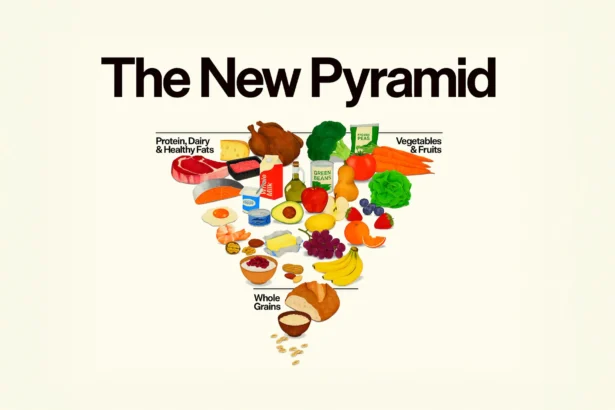
At the Jan. 7 briefing, officials unveiled a new graphic depicting an inverted version of the food pyramid. Protein, dairy, healthy fats, and fruits and vegetables sit at the top, the widest part, and whole grains were shifted to the bottom.
The guidelines also embrace a new stance on highly processed foods and refined carbohydrates, urging consumers to avoid “packaged, prepared, ready-to-eat, or other foods that are salty or sweet, such as chips, cookies, and candy.”
The new guidance also encourages Americans to select whole-food sources of saturated fat—including meat, whole-fat dairy, and avocados—while limiting saturated fat consumption to no more than 10 percent of daily calories.
Other suggested options are butter and beef tallow, a shift away from previous recommendations.
“These guidelines replace corporate-driven assumptions with common-sense goals and gold-standard scientific integrity,” Kennedy said, predicting that they will revolutionize the nation’s food culture.

A new poll released on July 9 shows that 60 percent of respondents to the new poll, released on July 9, said they supported the changes.
Conducted from March 19 to April 1 by the de Beaumont Foundation’s Public Health Listening Lab and Harvard T.H. Chan School of Public Health, the poll recorded input from 2,205 adult respondents. The margin of error was plus or minus 2 percentage points.
Ninety percent of respondents said they supported recommendations to avoid or limit sugar and highly processed foods, while 85 percent voiced support for increasing protein intake as recommended.
Around six in 10 respondents also said they supported the recommendations to eat more beef and drink more whole milk, with most support coming from Republicans.