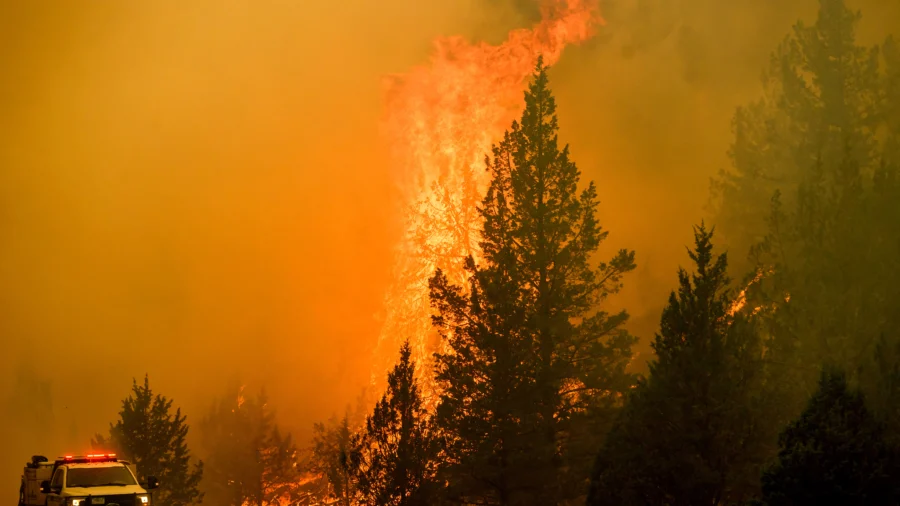
Officials have issued evacuation orders and air quality advisories in multiple states amid ongoing wildfires that have blanketed parts of the western United States, warning residents that smoke pollution could trigger respiratory symptoms and aggravate various health conditions.
Fires are currently raging in more than a dozen states, including Montana, California, Colorado, Nevada, and Utah, according to
data from NASA's Fire Information for Resource Management System. The Pacific Northwest is also among the most affected regions, with a slew of wildfires burning across Oregon, Idaho, and Washington.
In Oregon, fires have scorched through more than
1.7 million acres as of Wednesday morning, destroying homes and prompting several counties to implement Level 3 "Go Now" evacuation orders, indicating residents should leave the area immediately due to extreme danger.
The two largest blazes, the
Rowe Creek Complex and the
Big Grass fires, have each burned more than 300,000 acres after being sparked by lightning. Rowe Creek, which began in Wheeler County on July 15, is about 42 percent contained, while Big Grass, which started in Malheur County on July 23, is about seven percent contained.
The Oregon Department of Environmental Quality has also issued an
advisory until noon local time on Friday, warning that wildfires could cause air pollution to reach unhealthy levels.
"Pollutants in smoke can cause burning eyes, runny nose, aggravate heart and lung diseases, and aggravate other serious health problems," officials said.
The agency advised residents to limit outdoor activity and follow medical guidance if they have a heart or lung condition. They also noted that children should be kept indoors when smoke is visible.
Officials in Idaho and Washington have also put evacuation alerts and air quality advisories in place in areas impacted by widespread wildfires.
The Idaho Department of Environmental Quality
warned that smoke could cause breathing difficulties for children, the elderly, and those with respiratory problems and recommended those who are sensitive to smoke to avoid "prolonged or strenuous" outdoor activity while the advisories are in place.
The Department of Agriculture
reports that wildfires are very common in western states, largely due to hot, dry climates that allow flames to ignite and spread easily, with peak wildfire season typically occurring in the summer and fall.
In April, the agency
ordered officials to increase preparedness efforts ahead of the 2026 wildfire season, directing the Forest Service to boost national readiness. Secretary of Agriculture Brooke Rollins said the agency has already implemented major reforms under President Donald Trump's leadership aimed at improving forest management and strengthening coordination across federal agencies.
"This fire season we are prepared to continue our full suppression strategy to suppress fire starts quickly to protect our forests and rural communities," Rollins added.