


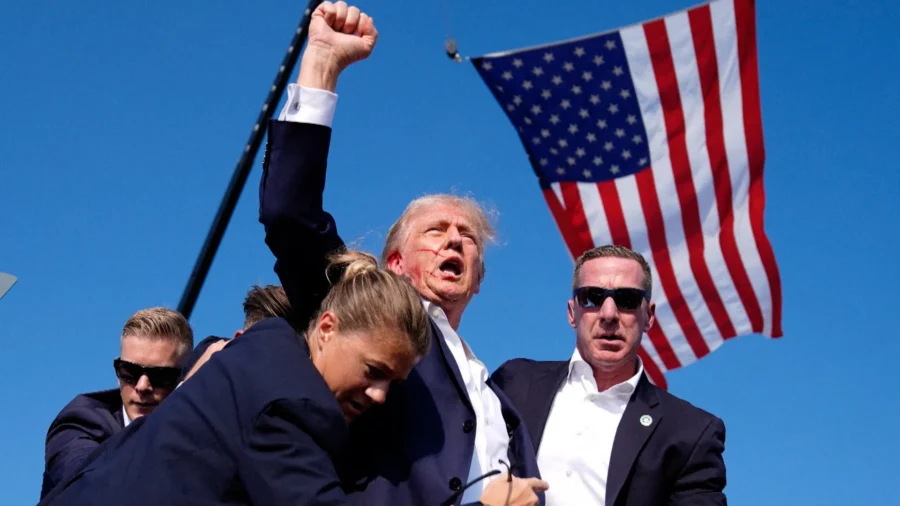
The U.S. Secret Service missed multiple opportunities to detect, prevent, and disrupt the attempted assassination of Donald Trump in Butler, Pennsylvania, in 2024, including missing more than 102 radio transmissions warning of a suspicious person, a Department of Homeland Security report concluded.
Among the report's most significant findings was that Secret Service members did not receive 102 radio transmissions “that local law enforcement officers in a separate communications room received concerning an increasingly intense search for a suspicious person. Instead, we found that the Secret Service received only five phone calls and three text messages about Crooks. As a result, Secret Service members did not alert President Trump’s protective detail about concerns of a suspicious person.”
The Secret Service would have delayed Trump’s speech or removed him from the stage had they been aware of the search for Crooks, the report stated.
The report also said the Secret Service failed to detect a drone that Crooks flew over the rally site about two hours before the shooting. Investigators said the agency's counter-drone system was inoperable because of a malfunction, and the lone operator assigned to the event lacked sufficient training to repair the equipment. The system remained offline while Crooks flew the drone for nearly nine minutes, allowing him to survey both the stage and the rooftop he later used to carry out the attack.
The report also found serious communication breakdowns between the Secret Service and local law enforcement. The Secret Service never received three radio reports from law enforcement that Crooks had climbed onto a roof with a rifle.
The inspector general also found that classified intelligence concerning a long-range threat to Trump was not shared with the Pittsburgh field office or agents responsible for planning security at the rally. The report said broader dissemination of that intelligence likely would have resulted in additional security personnel being assigned to the event.
Investigators further concluded that the Secret Service failed to ensure the American Glass Research complex, where Crooks launched the attack, was secured by state and local law enforcement. In addition, the agency did not use available resources to block the rooftop's line of sight to the stage, despite recognizing it as a potential vulnerability.
The inspector general issued seven recommendations to improve protective operations. The Secret Service agreed with all of them, and the report said some have already been implemented while others remain in progress.