


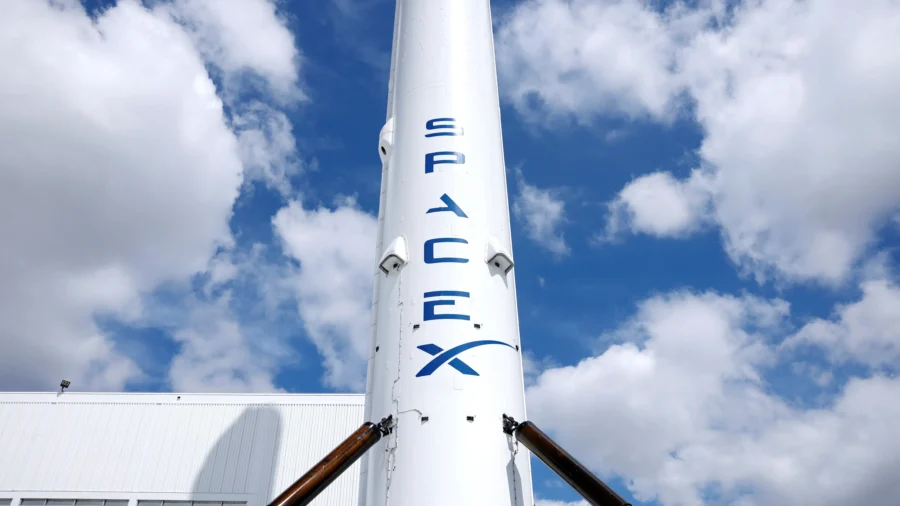
The world's richest man, Elon Musk, saw his aerospace company, SpaceX, officially list on the stock market on Friday (June 12).
Just a day prior, SpaceX completed the largest initial public offering (IPO) in history, raising a record-breaking $750 billion. However, notably absent from this group are investors from China and Hong Kong.
According to sources with knowledge of the matter, the company alleged that allowing Chinese investors to buy its shares would put it in the crosshairs of the U.S. International Traffic in Arms Regulations (ITAR), which govern trade in sensitive aerospace and defense technology.
As a key defense contractor, SpaceX is deeply embedded in U.S. military and intelligence infrastructure. It secures billions in contracts from the DoD and the National Reconnaissance Office (NRO), frequently serving as the exclusive provider of critical aerospace technology and services.
People based in Hong Kong or China trying to sign up to buy shares through the official SpaceX site were met with an “Error 1009” message, Reuters said.
Pressure From Washington
In recent years, U.S. tech and AI firms have grown increasingly cautious about accepting capital from Chinese investors—a shift that reflects a powerful backlash within the American political ecosystem against Chinese investment infiltrating sensitive technology sectors.On Feb. 5, Sens. Elizabeth Warren (D-Mass.) and Andy Kim (D-N.J.) sent a letter to Defense Secretary Pete Hegseth, demanding a national security review into SpaceX.
The move follows previous reports that Chinese-linked investors have been shifting funds through Caribbean entities to bypass SpaceX’s background checks and secretly acquire shares in the rocket manufacturer.
China Suppresses Domestic Outflow
On the other side of the equation, Beijing has intensified its efforts to block citizens from investing in American equities, launching a sweeping crackdown on cross-border stock trading since May.Many Chinese investors had relied on these three cross-border brokerages to open Hong Kong brokerage accounts, purchase U.S. stocks, and trade options. Under the new regulatory ban, however, existing clients are subject to a strict "sell-only, no-buy" restriction.
Compared to previous policy documents, the scope of this new crackdown has expanded dramatically to target investors, technology, and data transfer. For the first time, direct overseas investments by Chinese individuals will be placed under strict state surveillance.
According to Chinese media reports, over the past two weeks, the short-video platform Douyin (China's TikTok) has removed more than 1,500 videos related to cross-border investing. The deleted content primarily consisted of tutorials teaching Chinese users how to open Hong Kong bank accounts and securities portfolios.
"In other countries, how you invest the money you earn is entirely your own right. But Chinese citizens simply do not have that right," Xie added.