


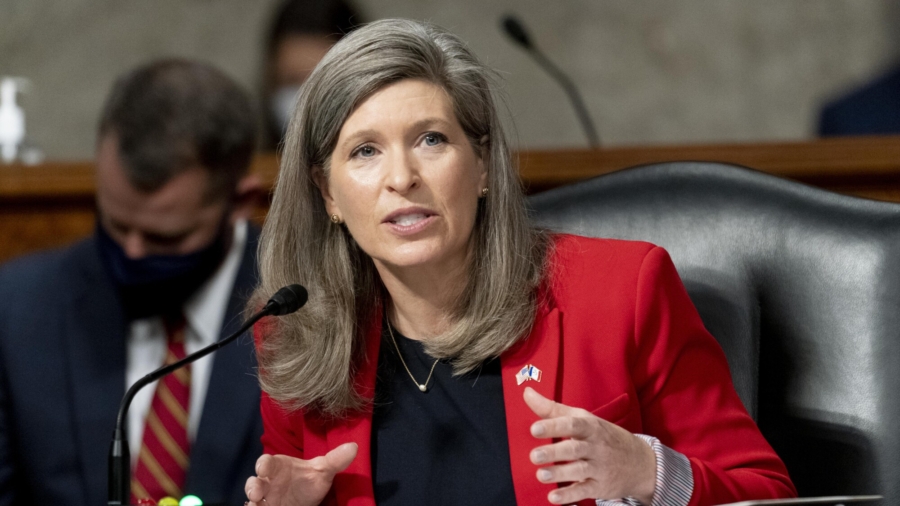
Sen. Joni Ernst (R-Iowa) recently wrote a letter to Attorney General Merrick Garland expressing her concerns over the Bureau of Alcohol, Tobacco, Firearms, and Explosives (ATF) engaging in so-called “knock and talk” investigations for the alleged "straw purchase" of firearms.
Straw purchases are a federal crime in which a person buys a firearm or firearms for another person who cannot legally buy the guns themselves. The crime is punishable by up to $250,000 in fines and 10 years in prison.
During a "knock and talk" investigation, ATF agents visit private residences and ask owners to display their recently bought firearms in order to prove that it was not a straw purchase.
“In all of the ‘knock and talk’ incidents brought to my attention, none involved the presentation of a warrant. Simultaneously, multiple ATF agents, dressed in official ATF gear—including bullet proof vests—did not inform the resident purchaser of the optional nature of his or her participation in brandishing the requested firearm,” Ernst said in the letter.
Ernst admits that straw purchases are illegal and that it contributes “significantly” to weapons trafficking. However, owning a firearm is a constitutional right that is protected by the Second Amendment, she points out. As such, ATF’s investigative work cannot be conducted “at the expense of that or any other constitutional right,” Ernst stated.
Such investigation must also not be used to “harass or intimidate” Americans who have purchased guns legally. Though the ATF is a law enforcement agency, it “cannot and should not” operate outside of proper legal channels.
The bureau must not be conducting investigations without reasonable cause or without proper documentation from the judiciary authorizing such investigation, Ernst said.
Questioning ATF Practices
Ernst asked Garland to answer a few questions within 30 days. This includes information on the criteria the ATF uses to establish probable cause prior to knock and talk procedures, a written record of such evaluations, whether the ATF obtains a warrant prior to the procedure, and how many such investigations the agency has conducted since July 2021.Ernst also asked for more details on the legal basis for ATF investigations and whether the bureau notifies local or state law enforcement authorities prior to such procedures.
“Knock and talk is a standard law enforcement technique. I tell my clients that they should invoke their [constitutional] rights and respectfully decline to talk with law enforcement without an attorney present,” Pennak said.