


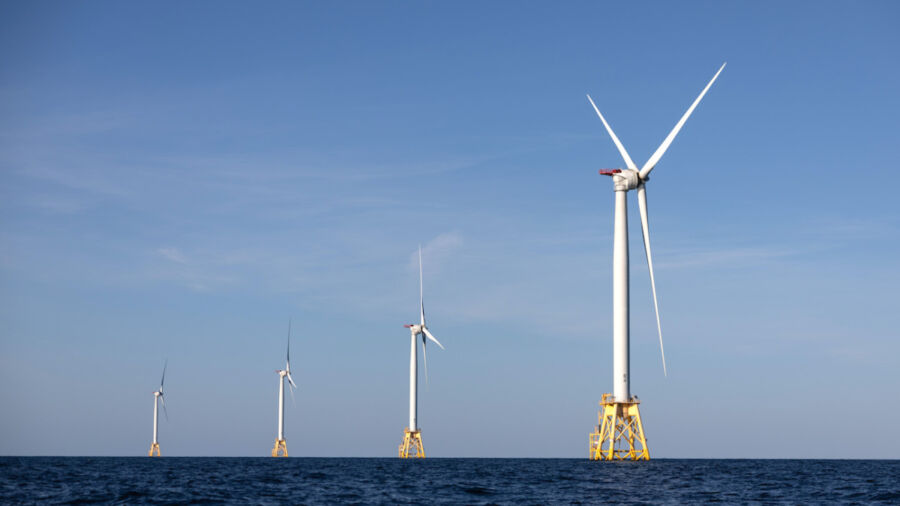
Oil and gas giant Shell announced on Thursday its withdrawal from a major offshore wind power project off the coast of New Jersey.
Shell, co-owner of the Atlantic Shores project, cited increased competition, delays, and changing market conditions as reasons for writing off the venture. Shell spokesperson Natalie Gunnell said in a statement, "Naturally we also take regulatory context into consideration."
The Atlantic Shores project, which had secured most of its necessary permits, was designed to generate enough electricity to power a million homes—roughly one-third of New Jersey—after completing two phases.
The project's future remains uncertain but Shell's partner, EDF-RE Offshore Development, says it remains committed to seeing Atlantic Shores through.
Shell's action follows recent executive actions by President Donald Trump targeting offshore wind power.
Trump's executive order, signed on his first day in office, implemented a temporary halt on offshore wind lease sales in federal waters and paused approvals, permits, and loans for such projects.
The order also directs administration officials to review existing offshore wind energy leases and explore potential legal grounds for termination.
This move has created significant uncertainty in the offshore wind industry.
Write-off of Nearly $1 Billion
The decision by Shell to withdraw from the project represents a write-off of nearly $1 billion in investment. This announcement coincided with Shell's report of a 16 percent decline in full-year earnings, from $28.3 billion to $23.7 billion.Opponents of offshore wind development in New Jersey have celebrated Shell's withdrawal.
Republican Rep. Jeff Van Drew of New Jersey, who assisted in drafting Trump's executive order, described the decision as a "big win" for the state's coastline and economy, but cautioned that "this fight is not over”.
Robin Shaffer, president of Protect Our Coast NJ, suggested that without Shell's financial backing, the project appears to be "dead in the water”.
The setback for offshore wind development in New Jersey follows a similar decision by Danish wind developer Orsted, which scrapped plans for two offshore wind farms in the state in October 2023 due to economic concerns.
Coco Zhang, vice president for environmental, social, and governance research at ING, said that while many clean energy sources have become more affordable, offshore wind remains among the most expensive, adding that "the potential uncertainty that the executive order has brought to the market, it cannot be ignored."
Wind's Challenges
According to the American Geosciences Institute, offshore wind projects face several challenges as they can be costly and difficult to build. The institute notes that such projects require the installation of power cables under the sea floor, which is very expensive. Another issue is that such structures are susceptible to damage from high winds, large waves, and storms, and there are unknown consequences to marine life and birds.Experts also say construction in waters deeper than approximately 200 feet is very challenging, which prevents the utilization of abundant wind resources on the West Coast, where ocean depths near the shore are much deeper than that of the East Coast.