


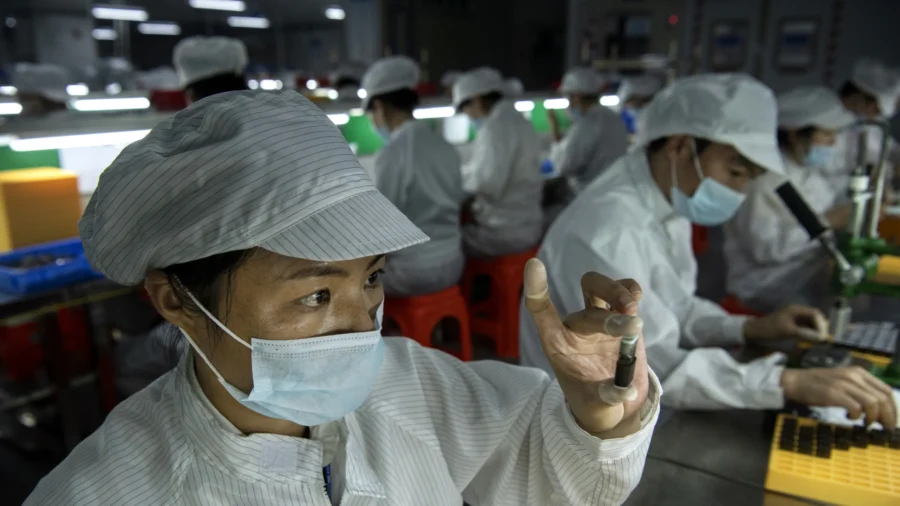
For years, Shenzhen has been touted in the Chinese communist regime’s official narratives as a fast-growing metropolis next to Hong Kong where ambitious young people could find high-paying jobs and a path to upward mobility. For many job seekers arriving today, that promise is proving elusive.
Despite repeated official messaging describing Shenzhen as a “city of opportunity,” many workers say the reality on the ground has changed.
Several Shenzehn residents spoke to The Epoch Times on condition of anonymity or publishing only their surnames out of fear or reprisal.
On recruitment platforms, job listings often advertise monthly salaries starting at 8,000 yuan (about $1,100), with meals and housing included.
Applicants say those figures can be misleading.
“The base salary might only be around 3,000 yuan,” a Shenzhen retiree surnamed Zhang told The Epoch Times. “The rest is performance-based. It pushes people to work overtime constantly, but there’s no guarantee of stable income.”
As competition intensifies, some intermediaries have stepped in to exploit vulnerable job seekers.
A female resident of Shenzhen’s Longgang district told The Epoch Times that employment agencies increasingly target young people struggling to find work.
“They claim they can arrange jobs, but first they charge fees,” she said. “A friend of mine paid 1,000 yuan ($146) for what was supposed to be an accounting job at an electronics factory. Then they told her the position was filled and pushed her into [an entry-level] sales role instead.”

A graduate jobseeker said in a video posted on Chinese social media that she was asked to pay for “training” as part of the hiring process, costs that come with no guarantee of employment.
Fewer Jobs, More Graduates
The challenges facing job seekers in Shenzhen reflect broader national trends.Chinese financial news media Caixin Global reported that the urban unemployment rate for people aged 16 to 24 is at 16.9 percent, citing China’s National Bureau of Statistics. The number of college graduates is expected to reach a record 12.7 million in 2026.
One analyst said the official figures understate the true scale of the problem.
“If you include those in unstable or informal employment, the real rate could be much higher—possibly approaching 40 percent,” the China-based scholar said.
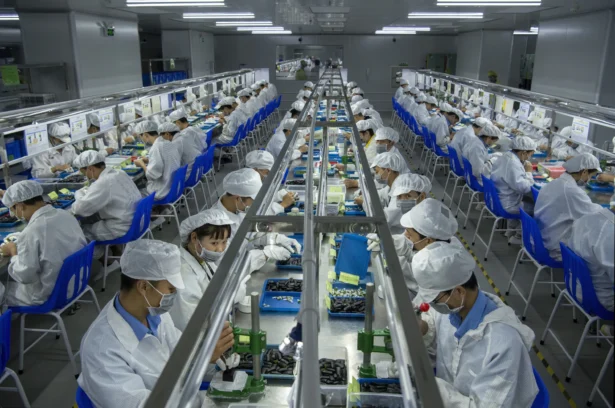
A business manager in Shenzen who runs a foreign trade company told The Epoch Times that many export-oriented businesses have scaled back or shut down entirely.
“Even university graduates don’t have many options now,” she said. “People come here with hope, but after two months, many leave disappointed. That’s the reality.”