


Currently, the affected areas include the Twin Cities metro area, Brainerd, Alexandria, Hinckley, St. Cloud, Winona, Moorhead, International Falls, Two Harbors, Hibbing, Ely, Duluth, and the Tribal Nations of Mille Lacs, Prairie Island, Leech Lake, White Earth, Red Lake, Grand Portage, and Fond du Lac.
Thousands of visitors were ordered to evacuate a remote Minnesota wilderness area accessible only by boat amid the heavy smoke and wildfire threat.
In Canada, 835 active wildfires were listed on Wednesday, including 112 considered out of control, prompting evacuations.
Environment Canada reported an Air Quality Health Index reading of 10+, which is classified as "very high risk," for Toronto.
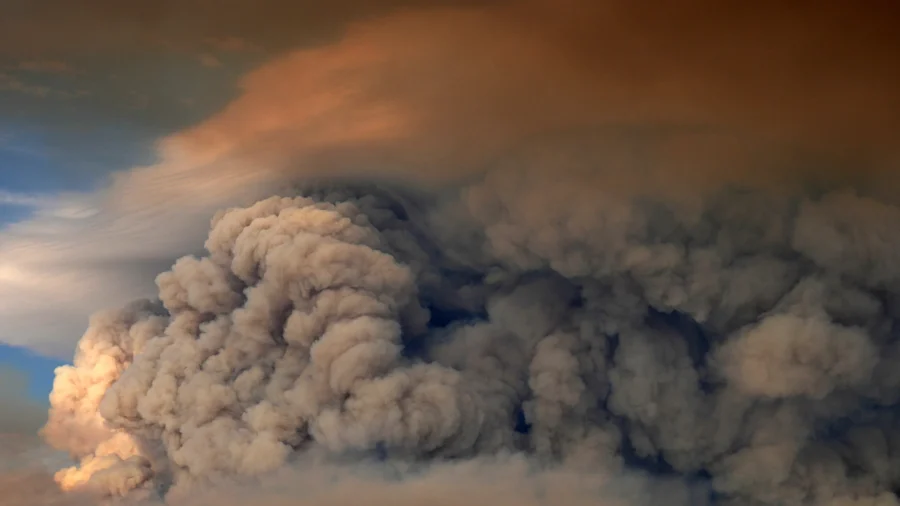
Heavy smoke from the Canadian wildfires has also spilled dangerously thick smoke across the U.S. northeast.
Skies in Manhattan appeared hazy on July 15, just days before neighboring New Jersey is set to host the World Cup final on July 19. Officials issued an air quality alert after pollution levels reached unhealthy levels, advising residents to limit strenuous outdoor activities and take more breaks when spending time outside on Wednesday and Thursday.
The region is also facing unusually high summer temperatures, adding to concerns about fire behavior and public health. A combination of high heat and heavy smoke can exacerbate health impacts.
Tyler Hasenstein, a meteorologist with the National Weather Service in Chanhassen, Minnesota, said the best advice for impacted residents is to stay indoors to avoid both the smoke and the extreme heat.
“Those two things coinciding with each other is not good from a health perspective,” he said.
Swiss air quality technology company IQAir ranked Toronto as having the worst air quality across the globe, surpassing Kinshasa and Delhi. New York was ranked at No. 5.