


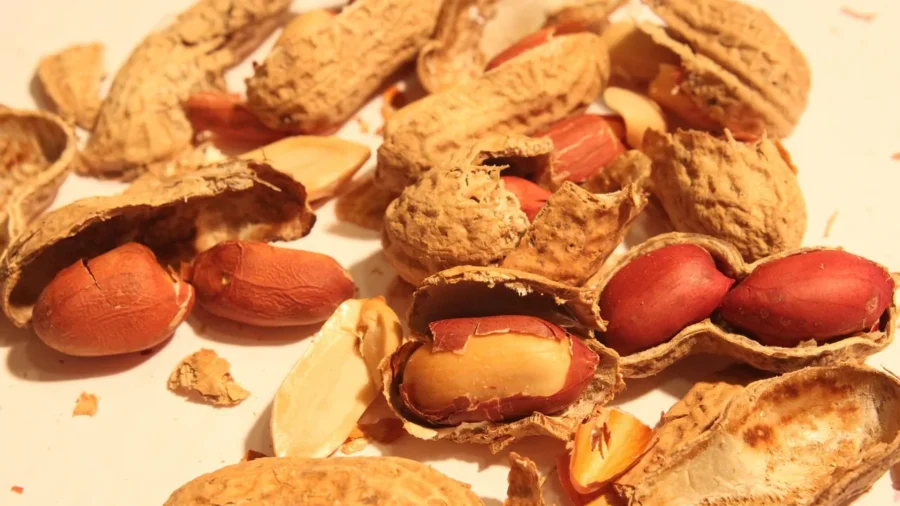
New research shows that eating certain peanuts may boost the memory of older adults by improving the blood flow to their brains.
“These favorable effects may underlie the observed improvements in verbal memory, highlighting a potential mechanism by which increased peanut intake beneficially affects cognitive performance,” the report states.
Skin-roasted peanuts are unblanched and unprocessed and cooked with their natural, thin red skins attached.
Joris is an associate professor in the Department of Nutrition and Movement Sciences at Maastricht University Medical Center in the Netherlands. He did not respond to requests for comment by the time of publication.
The study, which set out to investigate the longer-term effects of skin-roasted peanut consumption on brain vascular function and cognitive performance in older adults, involved observing 60 to 75-year-old participants while they consumed the peanuts daily for 16 weeks. They were allowed to eat the daily half-cup allocation all at once, throughout the day, or with their meals.
Results included increased CBF by 3.6 percent, heightened verbal memory by 5.8 percent, as well as decreased systolic blood pressure and pulse pressure by 5 mmHg and 4 mmHg, respectively.
"Peanuts are especially rich in plant-based protein and contain high concentrations of L-arginine, an amino acid important for vascular health,” Joris said. “They are also a valuable source of unsaturated fats and polyphenols, both known to support vascular function.”
The randomized, controlled trial employed magnetic resonance imaging to evaluate the effects of daily peanut consumption on brain health, while cognitive performance was reviewed using the computerized Cambridge Neuropsychological Test Automated Battery.
"For this study, skin-roasted peanuts were chosen because the peanut skin contains additional dietary fiber and natural plant compounds, specifically antioxidants," Joris added. "Together, these nutrients may help explain the beneficial health effects of skin-roasted peanuts observed in this study."