


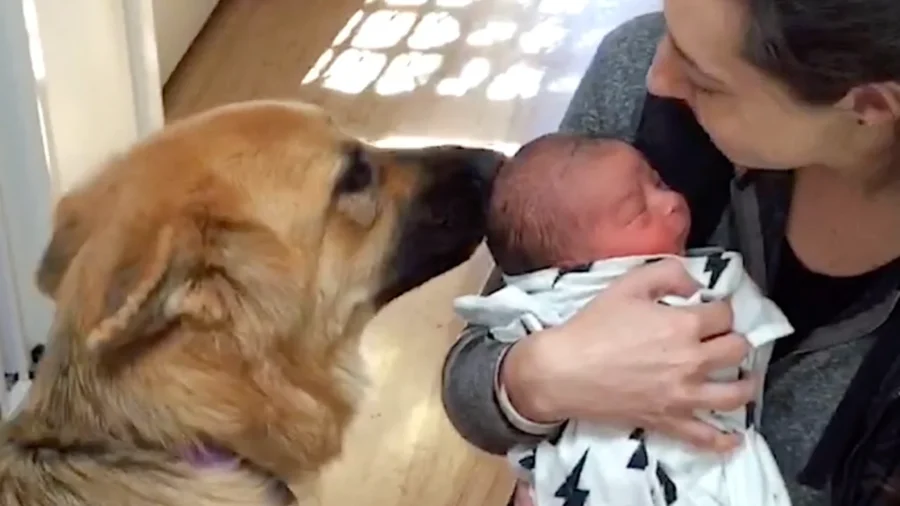
Researchers in Ohio have confirmed that exposure to a family's pet dog potentially reduces a child’s allergy risk.
Roskin is an assistant professor at the University of Cincinnati Department of Pediatrics.
The study was conducted with a team of 19 experts in asthma, biomedical informatics, genetics, immunology, and other fields at Cincinnati Children’s Hospital that evaluated the activity of antibodies produced by 147 children with eczema.
The discovery indicates that the immune system of kids with food allergies was delayed in its development by three years compared to other children, but when a dog lived in the home, the lag disappeared and exposure to a dog appeared to restart the immune system’s development process.
“This is particularly exciting given that new drugs are being tested in clinical trials than stimulate the immune system in a similar way,” Roskin said.
The findings add to a growing body of research showing that the early-life environment powerfully shapes immune development.
In fact, early exposure to diverse microbes that naturally come along with dogs and soil microbes gives the immune system practice distinguishing harmless exposures from true threats, according to Immune Confident Institute founder Dr. Kara Wada.
“That training helps shift the immune response toward tolerance rather than hypersensitivity,” Wada told NTD. “Dogs bring in outdoor microbes, soil organisms, and environmental variety that are genuinely beneficial.”
Registered dietitian and certified diabetes educator Brenda Peralta is surprised by how strong the association is between having a dog and showing more typical immune development.
“It is not often that a lifestyle factor like that stands out so clearly,” Peralta told NTD. “A lot of research has suggested that pets might lower allergy risk, but this study takes it a step further by showing what is happening inside the immune cells. It also shifts the conversation toward the idea that some allergic patterns may be related to delayed immune training rather than simply an overreaction.”