


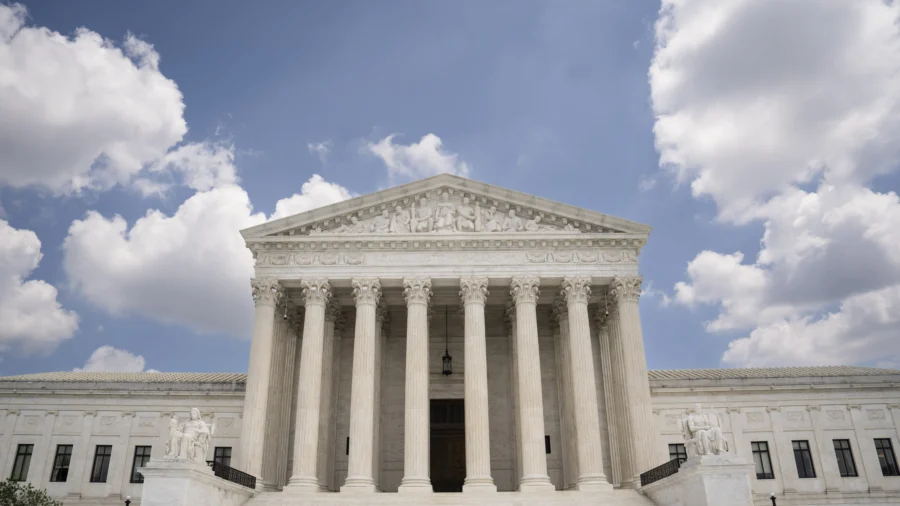
Former athletes and members of the sports community have publicly reacted to the Supreme Court’s Tuesday ruling, which upheld state laws banning transgender athletes from competing on female sports teams.
The court’s six-member conservative majority held that state bans in Idaho and West Virginia do not violate the Constitution. The justices unanimously concluded that excluding transgender girls and women from certain athletic participation does not conflict with Title IX, the federal law that prohibits sex discrimination in education.
Justice Brett Kavanaugh, who has coached girls' basketball, wrote that Title IX and the Constitution do not require an overhaul of women’s and girls’ sports throughout the country and highlighted concerns over safety and competitive fairness.
Former NCAA swimmer Riley Gaines has been one of the most prominent among former athletes who have argued that women’s sports should be limited to athletes who are female at birth.
Gaines noted that the ruling itself focused on school sports eligibility under state laws, not every level of women’s sports, and leaves different rules possible across states and sports organizations.
Gaines emerged as an advocate for protecting women’s sports after she competed against biological-born male Lia Thomas in the 2022 NCAA Women's Swimming Championships. Gaines and Thomas tied for fifth place in the 200-yard freestyle.
Thomas’s former teammate Paula Scalan applauded the Supreme Court’s decision.
Tennis legend Martina Navratilova also welcomed the court’s ruling.
Navratilova, who has won 59 Grand Slam titles and nine Wimbledon singles championships, has argued that fairness in women’s sports requires considering sex-based differences and has opposed allowing transgender athletes who experienced male puberty to compete in women’s categories.
Meanwhile, soccer stars Megan Rapinoe and Becky Sauerbrunn and basketball players Sue Bird and Breanna Stewart have publicly supported transgender athletes.
The Supreme Court decision involved cases centered on two transgender athletes—Becky Pepper-Jackson of West Virginia and Lindsay Hecox of Idaho, both represented by The American Civil Liberties Union (ACLU).
The ACLU called the court's decision “devastating” for trans students across the country who simply seek the freedom to play sports with their friends.