


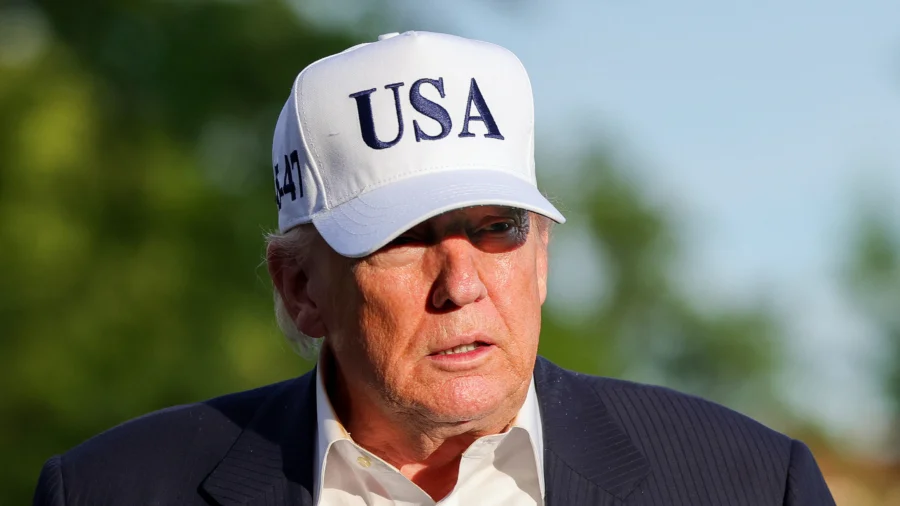
President Donald Trump on Monday said that the U.S. military will not strike Iran in what he called a planned attack on Tuesday.
In a post on Truth Social, the U.S. president wrote that the strike on Iran “was scheduled for tomorrow” but said it was called off because he and other leaders believe “a deal will be made” with Tehran that “will be very acceptable” to the United States. He added that the call-off of fresh military action was also at the behest of the leaders of Qatar, the United Arab Emirates (UAE), and Saudi Arabia.
A potential deal “will include, importantly, NO NUCLEAR WEAPONS FOR IRAN,” the president wrote, adding that he told Pentagon chief Pete Hegseth and Joint Chiefs of Staff Chair Dan Caine to hold off on the Tuesday attack.
However, Trump warned that he has “further instructed them to be prepared to go forward with a full, large scale assault of Iran, on a moment’s notice, in the event that an acceptable Deal is not reached.”
The comment comes as Trump told the New York Post earlier on Monday that negotiations with Iran are still underway and declined to comment on several details of a possible deal.
“I can tell you they want to make a deal more than ever, because they know we’re—what’s going to be happening soon,” Trump told the newspaper, adding: “It’s a negotiation. I don’t want to be stupid.”
No one was blamed in the drone strike, but it highlighted the risk of renewed war as the United States and Iran signaled they were ready to fight again. There were no reported injuries or radiological release.
The UAE, which has hosted air defenses and personnel from Israel, recently accused Iran of launching drone and missile attacks. Tensions have risen over the Strait of Hormuz, a vital energy waterway gripped by Iran, which is under a U.S. naval blockade.
Saudi Arabia condemned the attack, and later said it had intercepted three drones that entered from Iraqi airspace.
As part of a peace deal, Trump has said that he wants Iran to hand over any enriched uranium and ensure that no nuclear progress is made, accusing the country of seeking nuclear weapons.
Iran insists its program is for peaceful purposes, but it has enriched its uranium close to weapons-grade levels and is widely suspected of having had a military component to its program until at least 2003. Tehran has often restricted the work of United Nations atomic inspectors, including since the 12-day conflict with the United States and Israel last year.

On Monday, Iranian state-run media quoted an official as saying that the Iranian regime wants its frozen assets returned and also said that demands from the United States regarding its nuclear program are “against the rights of the Iranian people.”
“It is against logic and Iran will not agree with it. The Americans must understand that Iran will not agree to end the war in return for nuclear commitments,” the official said.