


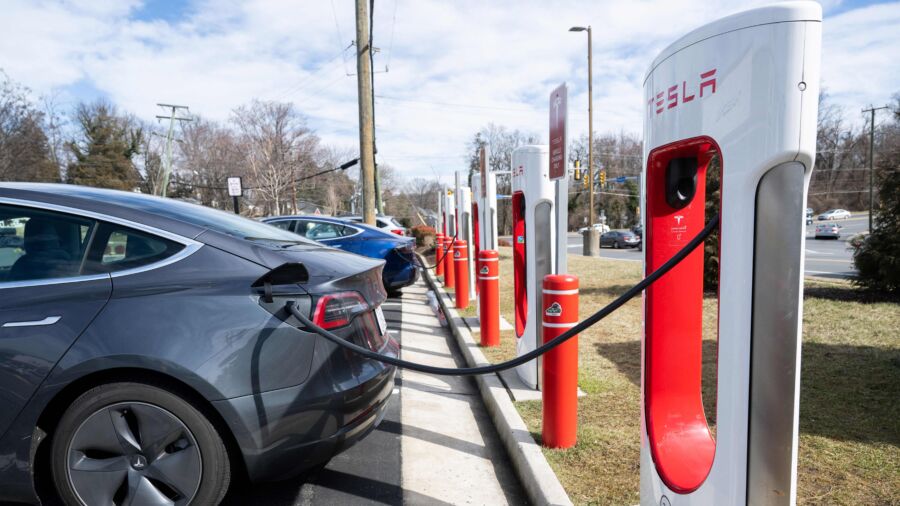
President Donald Trump is pulling the plug on Biden-era electric vehicle mandates. In the process, he’s indicating that the $7,500 EV tax credits may also be on the chopping block.
The order seeks to "eliminate the 'electric vehicle (EV) mandate' and promote true consumer choice, which is essential for economic growth and innovation, by removing regulatory barriers to motor vehicle access by ensuring a level regulatory playing field for consumer choice in vehicles; by terminating, where appropriate, state emissions waivers that function to limit sales of gasoline-powered automobiles.”
The order revokes the Biden Administration’s mandate that EVs comprise at least 50 percent of new U.S. vehicle sales by 2030.
While the Trump executive order doesn’t explicitly eliminate the $7,500 tax credit for new EV purchases in the language of the order, it does say the administration is “considering the elimination of unfair subsidies and other ill-conceived government-imposed market distortions that favor EVs over other technologies and effectively mandate their purchase by individuals, private businesses, and government entities alike by rendering other types of vehicles unaffordable.”
The Trump administration can’t issue an order cutting the $7,500 EV tax credit, which was included in the 2022 Inflation Reduction Act, but Congress “could limit tax incentives by capping a tax credit, for example, or narrowing the activity or outputs eligible for a tax credit,” according to the National Law Review.
Experts say the executive order is more intent than abolishment.
“The 'Unleashing American Energy' order seems to intend to abolish the $7,500 EV tax credits, and also abolish tax credits available for installing recharging equipment by individuals & businesses,” says Paul Miller, CPA and founder at Miller and Company in New York City.
Currently, the credits are still in effect for 2024 taxes, yet the future of the availability of these credits in 2025 and beyond “is up in the air,” Miller says.
Miller expects the order will face challenges from automakers, sellers, and environmental groups. “Several states also provide EV tax credits or incentives; these would not be affected by the Federal order, and states would decide independently whether to continue offering these incentives,” he says.
Other tax experts agree.
In a Jan. 22 conference call, EV tax expert Aruna Kalyanam, noted the odds of the Trump administration axing the EV tax credit are “really rather high, frankly.”
“In general, legislation that’s passed on a partisan basis is almost certainly the first on the chopping block for repeal in some way, shape, or form—and that could be for philosophical reasons, but it could also be for fundamental revenue reasons,” Kalyanam added.
A congressional tax credit “sunset” phaseout is also possible, Kalyanam indicated. This means the provision could be left to expire after a certain date. The $7,500 EV tax credit is set to expire in 2032.