


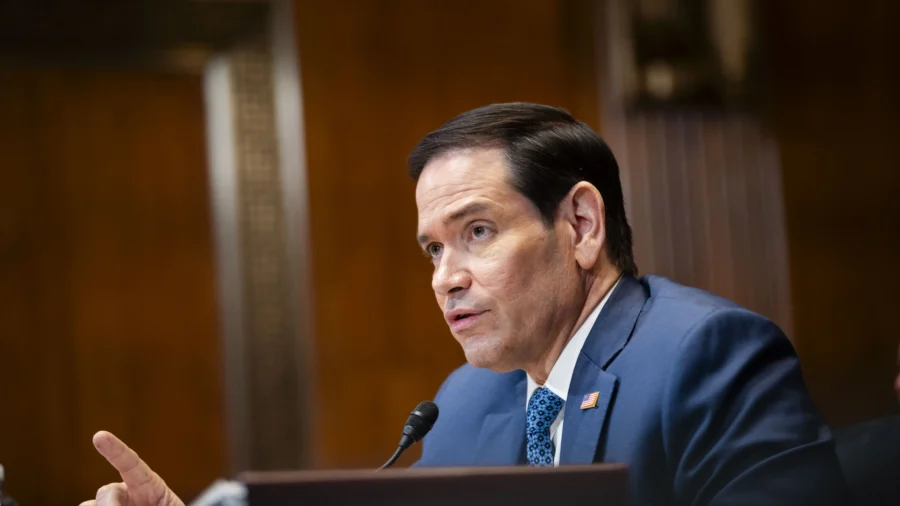
U.S. President Donald Trump will attend the NATO summit in Turkey next month, U.S. Secretary of State Marco Rubio has said, amid tensions between the president and the defense union over support during the Iran war.
Speaking before the House Foreign Affairs Committee on June 3, Rubio touched on Trump's frustration that some NATO members were not allowing U.S. forces to use their bases for recent missions in the Middle East.
"The United States is still in the NATO alliance, and we'll be there in Turkey to talk about all these topics. The president himself will be attending the next NATO meeting of heads of state, where all these points will be made clear," Rubio said.
"We're still in NATO, but NATO needs significant changes, and the president has made that clear. He is disappointed in NATO."
The next NATO summit will be held in Ankara, Turkey, on July 7 and 8.
Reciprocity in NATO Needed
In comments to lawmakers, Rubio reiterated points he had made several times before: that he remains a "strong supporter" of NATO, both personally and in the Senate, and that he still sees its utility."The problem with NATO, as I want to point out, is those bases that we have in the region is one of the reasons I used to argue why NATO was so important. It allowed the U.S. to project power and have power in case of contingencies," he said.
"We had a contingency, and we had countries in NATO that said, 'No, you can't use our bases.' Particularly Spain. Now, I want to be fair, there were other countries that have been extraordinarily cooperative and what they've helped us to do—some publicly and some privately."
He said that a problem is that the United States is being asked to be drawn into European matters, while NATO allies are not always prepared to reciprocate when the United States needs support.
"I think the president's irritation with NATO is that in a time of conflict and crisis where the United States had a need, you had members of this alliance—who are constantly asking us to get to get involved in European matters, like Ukraine and things of this nature—who, in our time, were actually telling us: 'No, your tankers can't use our air base. No, you can't use it to refuel. No, you can't use it for logistical support,'" Rubio said.
US Cuts Forces Contribution
On June 3, the United States announced it would cut its contributions to NATO, citing the “potential reality” of fighting multiple wars at once.USEUCOM Commander U.S. Air Force Gen. Alexus G. Grynkewich said there had been an “unhealthy co-dependence” on American forces. He said that Trump and Secretary of War Pete Hegseth have “been clear that this needs to change, and it will change.”
“The potential reality of simultaneous conflict in multiple theaters demands it,” he said.
Grynkewich also said the change will strengthen the alliance’s defense plans by making them more realistic. He said it would ensure that NATO is not overly reliant on U.S. forces, which are needed to maintain deterrence in other regions of the world and to respond to changing global contingencies.
The push for Europe to do more to secure its own defense came as the United States reoriented its defense and security priorities.
It also stated that the United States would encourage partners in other parts of the world, including Europe, to take primary responsibility for their own defense “with critical but limited support from U.S. forces.”