


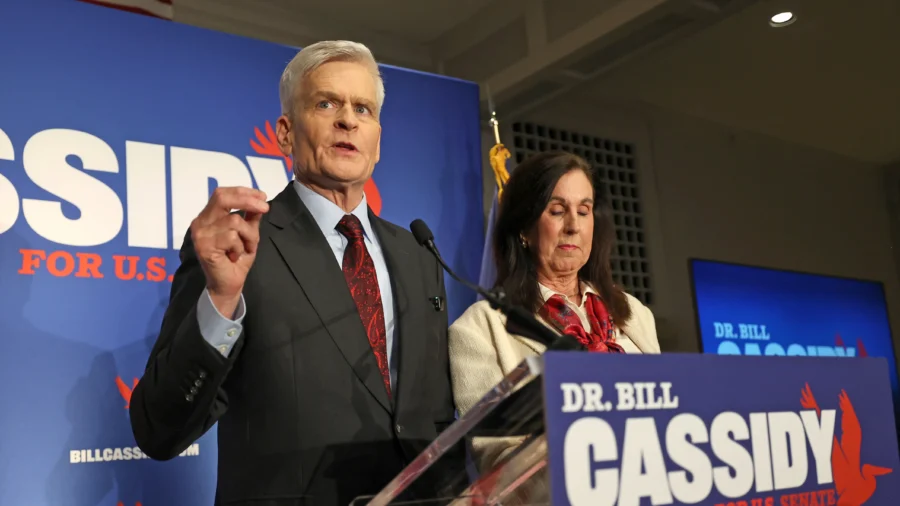
WASHINGTON—In recent GOP primaries, President Donald Trump has had a Midas touch.
The candidates he endorsed against Sen. Bill Cassidy (R-La.), Rep. Thomas Massie (R-Ky.), multiple Indiana state lawmakers, and other Republican incumbents triumphed in high-profile contests.
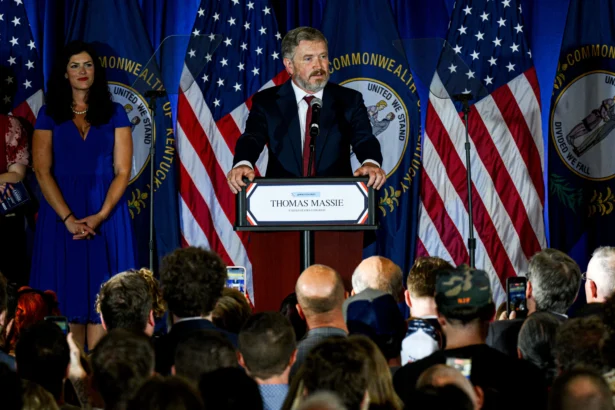
“The defeat of Thomas Massie in Kentucky and the state legislators in Indiana once again demonstrates that President Trump’s active support is the most important thing in GOP primaries, as it has been for the past decade,” said Jim Bognet, a former Republican congressional candidate and partner with the Brunswick Group, in a text message to The Epoch Times.
David Carlucci, a political consultant and former Democratic state senator, agreed that Trump’s imprimatur matters a lot in primaries.
“For many GOP voters, loyalty to Trump remains one of the clearest signals of ideological alignment,” he said in a text message to The Epoch Times.
A few big questions remain. Who could Trump target next—and will his successes translate to victories in the general election amid sinking approval ratings and growing resistance to his agenda from Republican senators?
For now, Trump’s allies keep winning, while those he opposes keep losing.
Wes Farno, a Republican-aligned Ohio-based political consultant, told The Epoch Times in a text message that “the bigger question for Republicans going into 2026 is not whether President Trump can win a primary headline, it’s whether the coalition that showed up for him in 2024 will stay engaged when he is not personally on the ballot.”
He and others who spoke with The Epoch Times highlighted turnout, which could be more important than persuasion in hard-fought midterms.
Casualty List Grows
Cassidy, who voted to convict Trump in his second impeachment trial, joins the casualty list of most Republicans who backed that effort, including former representative Liz Cheney.Many other Republicans who have resisted Trump’s moves are out of contention due to primary losses, leaving office, or opting against a reelection bid.
Rep. Dan Newhouse (R-Wash.), who voted for the second impeachment of Trump, is not running again.
The last House Republican impeachment supporter up for reelection, Rep. David Valadao (R-Calif.), is facing a tough reelection battle in his district, which was redrawn amid a nationwide redistricting battle.
Sen. Susan Collins, who joined Sen. Lisa Murkowski (R-Alaska) and others on that conviction vote, is likewise fighting for her political life against Graham Platner, the presumptive Democratic nominee.
Sen. Thom Tillis (R-N.C.), who broke with Trump on the One Big, Beautiful Bill Act, is leaving office at the end of his term.
Former representative Marjorie Taylor Greene, who departed Congress amid a highly publicized rift with Trump, was ultimately replaced by Trump-backed Rep. Clay Fuller (R-Ga.).
The latest outcomes show just how costly opposition to Trump can be for Republicans, at least in primaries.
Libertarian-leaning Massie is known for his willingness to vote “no” on GOP-backed bills out of concerns over spending.
He also clashed with fellow Republicans over the Epstein Files, Israel, and the Iran War.
Massie had overcome previous Republican challenges, including a 2020 race that came after Trump called to “throw Massie out of [the] Republican Party.”
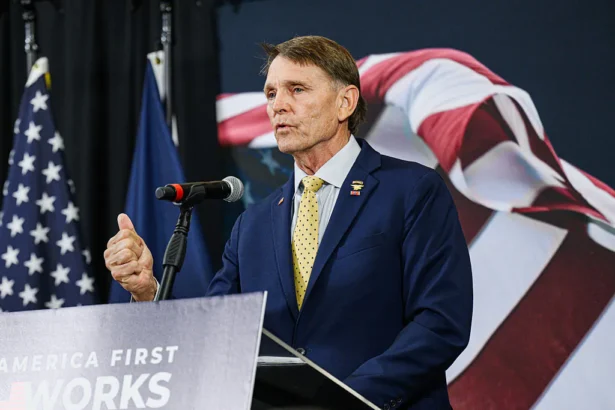
This time, though, Trump and his allies threw significant weight behind Massie’s opponent, retired Navy SEAL Ed Gallrein, and against Massie.
That included Trump’s on-stage appearance alongside Gallrein at a Kentucky rally as well as most of the $33 million in ad spending in the race, which AdImpact Politics noted was the most expensive House primary in history.
“For candidates who embrace the endorsement, this opens the door for national dollars and support, as the president remains a prolific fundraiser,” Alexander Rauda, a senior associate with the nonpartisan consulting firm Actum Strategies, told The Epoch Times in an email.
Victories Amid Dipping Approval
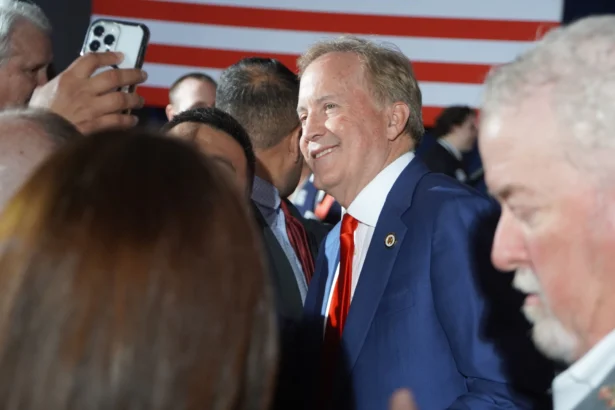
Some GOP incumbents have taken umbrage at Trump’s shot-calling.In particular, the president’s endorsement of Texas Attorney General Ken Paxton against Sen. John Cornyn (R-Texas) in the May 26 Senate primary runoff has fueled discontent among Senate Republicans.
Cornyn has received significant support from the National Republican Senatorial Committee (NRSC) and other sources.
In the runoff alone, he has benefited from almost $20 million in ad spending as against a little more than $5 million for Paxton.
After Trump’s endorsement came down, Senate Majority Leader John Thune (R-S.D.), who supports Cornyn’s reelection bid, told reporters that “none of us control what the president does.”
Collins expressed disappointment over Trump’s move, while Murkowski said she did not understand his decision.
Intra-Republican disagreement over Trump’s $1.776 billion fund to compensate alleged victims of weaponization helped spark an early Republican departure from Washington for their Memorial Day recess.
That means lawmakers will not hit Trump’s June 1 deadline for a party-line bill to fund immigration and border enforcement.
“I believe Trump’s base feels like he’s being prevented from fulfilling his campaign promises by Republicans that are moving against him,” Aleks Oslapas, a consultant with the communications firm Audacia Strategies, told The Epoch Times in a text message.
Trump’s wins also come at a taxing moment for his national brand.
Amid a broadly unpopular war with Iran and mixed economic signals, including high gas prices, Trump’s approval rating among all Americans is falling.
In separate assessments of multiple surveys, both RealClearPolling and Nate Silver found that less than 40 percent of Americans approve of his job performance, while more than 58 percent disapprove of it.
Although polls show Republicans still overwhelmingly approve of how Trump is handling the presidency, recent surveys from Fox News and the Pew Research Center found that their support was weakening.
In Carlucci's view, "Trump’s approval ratings matter less inside Republican primaries than they do in the general election."
Rauda said that "the base remains staunchly supportive of the president’s agenda."
The strategists and consultants who spoke with The Epoch Times stressed the importance of turnout if Republicans want to win in November.
Bognet predicted that “in the general election, GOP congressional candidates will line up to have President Trump visit their district to help drive turnout among the GOP base and Trump-aligned independents.”
Oslapas expects “a battle for turnout, with both sides lacking a unified rallying cry for their supporters.”
Rauda noted that Trump’s seal of approval might not always help Republican hopefuls.
“Candidates in more difficult contests may be less enthusiastic to receive the president’s endorsement, since they face constituents more skeptical of the president’s agenda.
"In these races, Democratic campaigns do not let voters forget about Trump’s endorsement,” he said.
Carlucci warned that both Republicans and Democrats face vulnerabilities related to their responses to Trump.
“The danger for Republicans is that candidates who are perfectly calibrated for a MAGA primary can sometimes struggle with independents and moderate voters later on,” he said.
Future Endorsements
As the primary season continues, Trump might well weigh in on other contests.Ahead of the May 19 primary in Georgia, a Republican operative told The Epoch Times that Trump might endorse a candidate in the runoff if it comes down to former college football coach Derek Dooley against Rep. Mike Collins (R-Ga.).
That was, in the end, the way it shook out. The runoff is scheduled for June 16.
Trump also threatened to withdraw his endorsement of Rep. Lauren Boebert (R-Colo.) after she campaigned with Massie.