


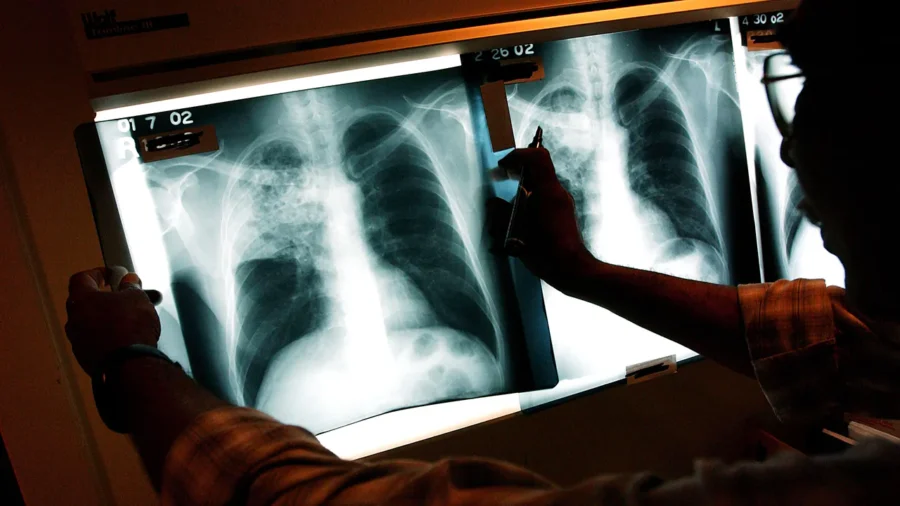
Tuberculosis, also called TB or the “white plague,” is caused by the bacterium Mycobacterium tuberculosis and spreads through the air. It can be fatal without treatment.
The CDC reported 10,260 tuberculosis cases in 2025, a 1 percent drop from the previous year, according to preliminary data. However, some states have seen an increase in tuberculosis cases.
New Hampshire recorded the largest percentage increase, doubling from 12 to 24 cases, followed by North Dakota, up 64 percent, and Colorado, up 32 percent.
Conversely, Wyoming saw the largest drop, going from four cases to zero, with Kansas and Arkansas also seeing declines of 46 percent and 32 percent, respectively.
The states with the highest total cases in 2025 were California (2,150), Texas (1,295), New York (967), Florida (675), and Georgia (306).
Although some states have seen increases in cases, long-term data show that the disease remains far less common and deadly than in the mid-20th century.
Cases have declined steadily for decades, reaching 8,895 in 2019 before dropping further to 7,170 in 2020, a nearly 20 percent decrease, the largest in recent record-keeping.
However, from 2021 through 2024, cases climbed again, reaching 10,388 in 2024—the highest level in about a decade.
The 2025 data show declines across most age groups—except for adults 65 and older. This age group had 2,632 cases in 2025 compared with 2,518 the previous year.
Last year, children aged 0 to 4 saw 217 cases, down from 267 in 2024. Ages 5 to 14 dropped to 196 from 254.
Young adults aged 15 to 24 had 1,046 cases, down from 1,143, and adults 25 to 44 recorded 3,429 cases, a slight decrease from 3,504.
TB Warning Signs
Active tuberculosis often causes a persistent cough lasting weeks, chest pain, coughing up blood or sputum, fatigue, weight loss, fever, and night sweats, according to the CDC. It can affect the lungs and can lead to serious complications.The CDC says its annual tuberculosis surveillance report is usually published later in the year, in the fall.