


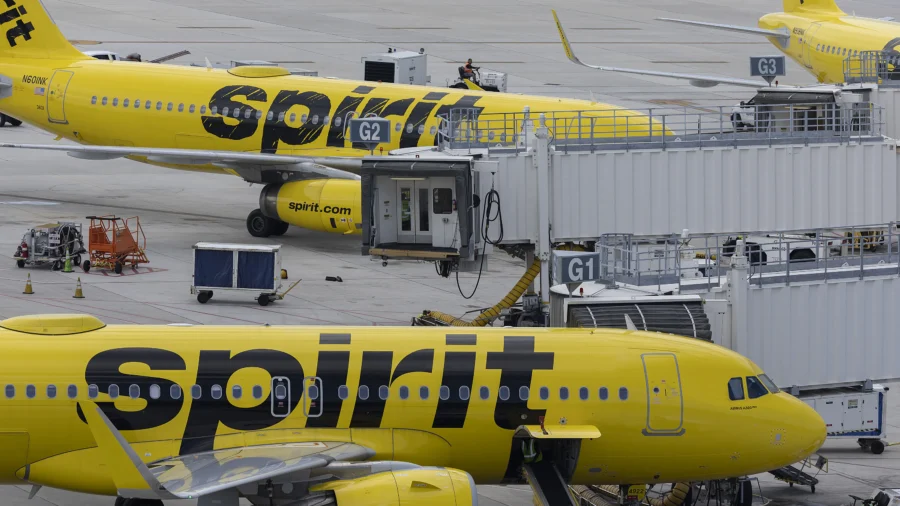
Major airlines are taking extra steps to appeal to potential customers after budget carrier Spirit Airlines filed for bankruptcy.
United Airlines said it will start selling tickets on Thursday for new flights to 15 cities where Spirit operates. The Chicago-based carrier will also fly larger aircraft between Chicago and New York's LaGuardia Airport to help customers outside of its hubs connect to those new flights.
The move comes after Spirit filed for bankruptcy less than a week ago.
"If Spirit suddenly goes out of business, it will be incredibly disruptive, so we're adding these flights to give their customers other options if they want or need them," Patrick Quayle, United's senior vice president of global network planning and alliances, said in a statement.
Following United's announcement, Frontier Airlines revealed it was launching 22 new routes.
Spirit, known for its bright yellow planes and low-cost fares, dismissed other airlines' efforts during their restructuring process.
"While we appreciate the obsession certain airline executives have with us, we’re focused on competing and running a great operation," Duncan Dee, Spirit’s senior vice president of corporate communications, said in a statement.
"Suggesting anything else is wishful thinking on the part of a high-cost airline looking to eliminate a low-cost competitor so they can fulfill their ultimate goal of charging American travelers the highest fares possible to visit the people and places they love."
NTD reached out to Spirit seeking comment, but did not receive a response by publication.
Budget carriers such as Florida-based Spirit are under pressure from bigger airlines that have launched their own low-cost fares.
At the same time, Spirit was moving farther away from its history as a budget-friendly airline and more toward upscale travel with its new tiered pricing.
The airline will still honor tickets, reservations, credits, and loyalty points, it said. It will also pay wages and honor benefits to employees and pay certain partners for services completed before it filed for bankruptcy.
Before its recent bankruptcy, the discount carrier in August said in a quarterly report that it had "substantial doubt" about its ability to continue operations, reporting a negative free cash flow of $1 billion at the end of the second quarter.
This marks the second time the airline has filed for Chapter 11 bankruptcy. The carrier declared bankruptcy in 2024, but ended up exiting bankruptcy in March 2025.
Spirit had experienced tumultuous times during the COVID-19 pandemic and struggled to rebound. Spirit had lost more than $2.5 billion since the start of 2020 by the time of its first filing.
The airline’s previous Chapter 11 petition focused on reducing debt and raising capital. Since exiting that process in March, “it has become clear that there is much more work to be done and many more tools are available to best position Spirit for the future," according to its CEO.
Moving forward, the airline carries $2.4 billion in long-term debt, a majority of which is due in 2030.