


U.S. forces have carried out strikes on 30 ISIS targets in Syria since Feb. 3, the U.S. Central Command (CENTCOM) announced on Feb. 14.
CENTCOM, which oversees U.S. military operations in the Middle East, said U.S. forces under its command conducted 10 sets of strikes between Feb. 3 and Feb. 12.
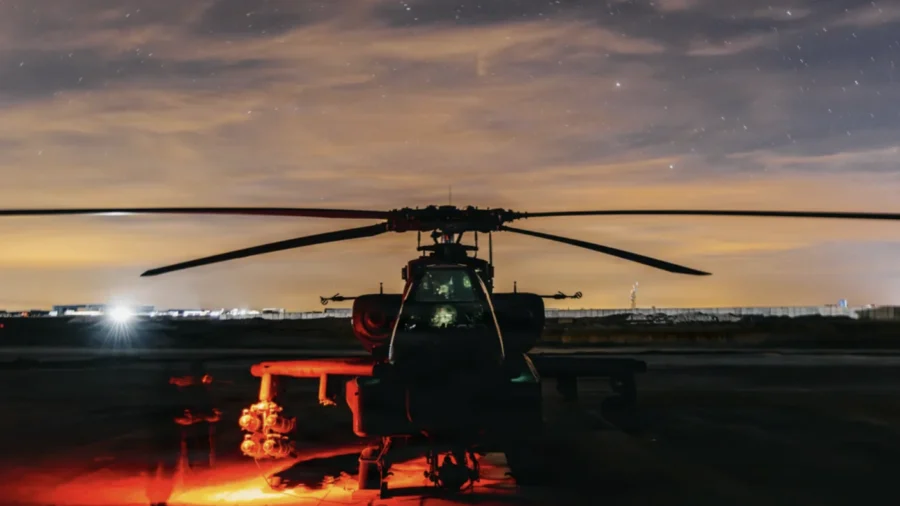
According to CENTCOM, U.S. forces used manned helicopters and fixed-wing aircraft, as well as unmanned aircraft, to attack weapons storage sites and other infrastructure connected to ISIS.
These latest U.S. strikes in Syria are part of a larger campaign—dubbed Operation Hawkeye Strike—which was launched in response to a Dec. 13, 2025, ambush shooting, in which two U.S. soldiers and a U.S. civilian interpreter were killed. ISIS claimed responsibility for the attack.
“More than 50 ISIS terrorists have been killed or captured and over 100 ISIS infrastructure targets have been struck with hundreds of precision munitions during two months of targeted operations,” CENTCOM said on Saturday.
The U.S. government has worked to gain the support of Syria’s interim government in continuing counter-ISIS efforts.
Syria’s current government was formed after Sunni Islamist militants from the Hay’at Tahrir al-Sham (HTS) drove former leader Bashar al-Assad from power and took over the capital city of Damascus in December 2024.
HTS began as a Syrian offshoot of al-Qaeda, and the U.S. government had considered it a foreign terrorist organization at the time the group seized power in Damascus. The U.S. government has since reversed the terror group designation against HTS and retracted a $10 million bounty against Ahmad al-Sharaa, who led HTS in the takeover before assuming the role of interim president.
U.S. forces had heavily partnered with the predominantly Kurdish Syrian Democratic Forces (SDF) throughout the counter-ISIS mission, which began in 2014.
The SDF has shown reluctance to integrate with Sharaa’s government in the past year, and the two factions have repeatedly traded fire.
In January, Sharaa’s forces attempted to take over at least three SDF-run detention facilities used to house ISIS suspects and their families. The ensuing armed clashes near those detention sites fueled fears of a major prison break that could fuel an ISIS resurgence. CENTCOM has since relocated 5,700 detainees to more secure facilities in Iraq.
The plan also includes provisions to safeguard Kurdish interests in post-Assad Syria.
On Feb. 9, the Global Coalition to Defeat ISIS said Sharaa’s new Syrian government had become the 90th participating member of the coalition.