


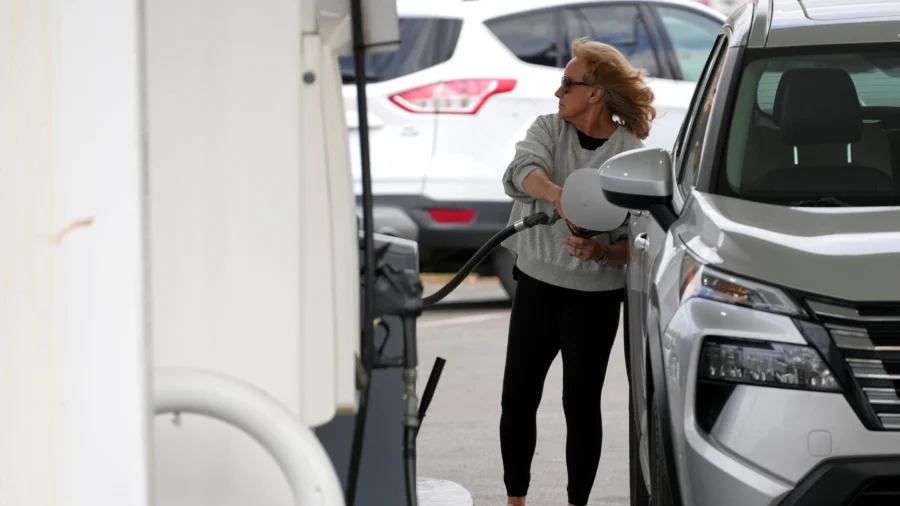
U.S. inflation cooled last month as the cost of gas, clothes, and used cars fell, providing some relief to consumers.
Prices dropped 0.4 percent in June from May, the largest monthly drop in four years, the Labor Department said Tuesday. On a yearly basis, inflation declined to 3.5 percent, down from a year-over-year gain of 4.2 percent in May and lower than many economists expected.
Gas prices have fallen nearly 20 percent from their peak in late May but have rebounded in the past week, likely in response to renewed fighting in the Middle East. Gas prices averaged $3.87 a gallon nationwide Monday, up 7 cents from a week earlier. They averaged $4.09 a month ago, according to AAA.
Excluding the food and energy categories, core prices were unchanged in June, a positive sign that underlying inflation is cooling. On a yearly basis, core prices rose 2.6 percent, down from 2.9 percent the previous month. Core inflation remains above the Fed’s target of 2 percent.
The inflation-fighters at the Fed remain sharply divided over next steps, according to minutes of their June 16-17 meeting. About half of policymakers support raising interest rates by the end of the year to cool borrowing, spending, and price increases, the minutes showed. Another half are willing to wait for signs that inflation may resume falling as gas prices decline, though the minutes predate the recent flare-up of violence in the Middle East.
Chair Kevin Warsh, who took over May 22, has underscored that the Fed is tightly focused on getting inflation back to its target of 2 percent, though he has declined to signal what the Fed's next steps will be.
The Fed left its benchmark interest rate unchanged in the 3.50-3.75 percent range at the June meeting, though new projections revealed a growing sentiment around a likely rate hike in 2026.
Prior to the inflation data, financial markets were pricing in a roughly 51.9 percent chance of the Fed raising borrowing costs at its September 15-16 policy meeting, according to CME's FedWatch tool.