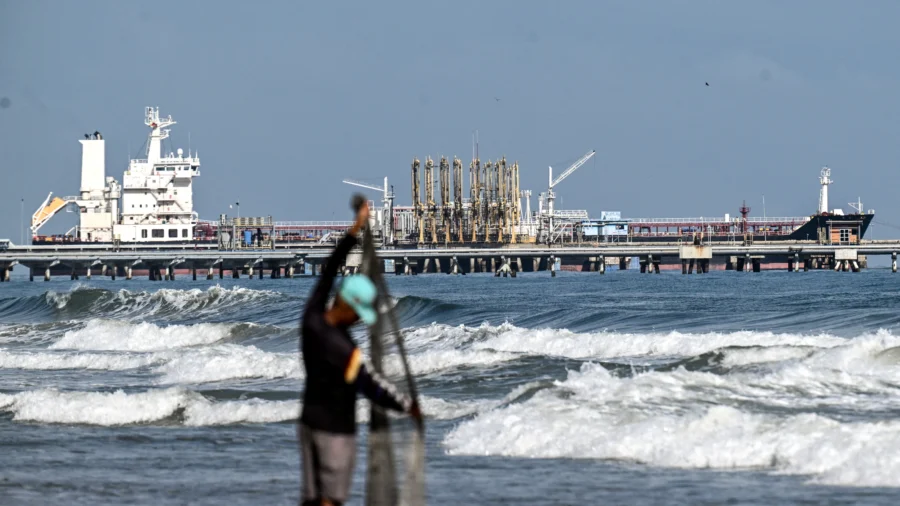
The United States, on March 13, moved to ease sanctions on Venezuela to allow imports of petrochemical products and investments in Venezuela’s oil industry amid rising commodity prices due to the war in Iran.
The U.S. Treasury Department issued a
license allowing the sale of Venezuelan oil and petrochemical products, including fertilizer and its precursor chemicals, for import into the United States.
It also issued a second
license authorizing U.S. companies to provide goods, technology, or services for the exploration and production of oil, gas, or petrochemical products in Venezuela.
A third
license permits U.S. entities to negotiate contingent contracts for new investments in Venezuela’s oil, gas, petrochemical, or electricity sectors, provided the contracts remain subject to separate authorization from the Treasury Department’s Office of Foreign Assets Control (OFAC).
The licenses do not authorize transactions with entities connected to Russia, Iran, North Korea, Cuba, and China.
In a
post on X, the Treasury said the updated licenses would expand permissible investments and activities in Venezuela’s energy sector and enable direct exports of Venezuelan fertilizer to the United States.
“The Trump administration has been rapidly delivering on [the president’s] promise to help restore Venezuela’s economy to benefit both the American and Venezuelan people,” the Treasury said.
“Today, the Treasury Department’s Office of Foreign Assets Control updated several Venezuela-related licenses to further support the revitalization of the country’s energy sector and help ensure a well-supplied global commodity market.”
The U.S. government began to ease sanctions on Venezuela following the capture of Venezuelan leader Nicolás Maduro in a Jan. 3 military operation. Vice President Delcy Rodríguez was subsequently appointed as interim leader, while Maduro faces criminal charges in the United States.
Last month, the Treasury Department
issued a general license authorizing the exploration, development, and production of oil and gas in Venezuela.
The license allows U.S. citizens to conduct specific oil and gas-related transactions with the Venezuelan government, including providing goods, technology, software, and services for exploration work, development of new oil and gas sites, or production.
The move came as the Trump administration worked to curb surging commodity prices from the conflict with Iran, which has driven up oil and fertilizer costs.
Prices for nitrogen urea, a key component of fertilizer, have skyrocketed in recent weeks to about $580 a ton, up from around $450 a ton in February. Countries in the Middle East account for about half of the global urea exports, and about 30 percent of global ammonia exports,
according to the American Farm Bureau Federation.
Agriculture Secretary Brooke Rollins
said on March 13 that officials have been in discussions with members of Congress and farmers as they consider solutions, including the potential use of taxpayer money to support farmers.
Jill McLaughlin and Zachary Stieber contributed to this report.