


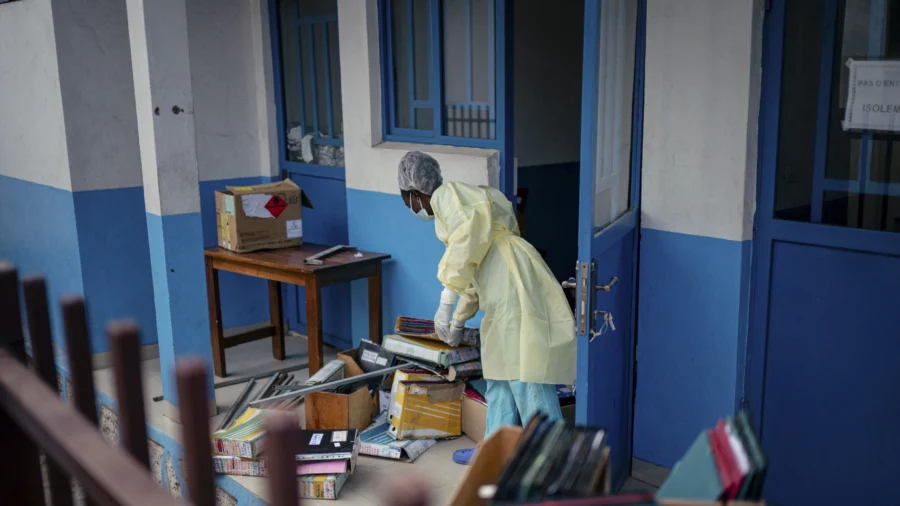
The U.S. government on May 18 said it will not let people without U.S. passports enter the United States if they have been to African countries affected by, or close to, a new Ebola outbreak within the past 21 days.
The order, signed by acting CDC Director Dr. Jay Bhattacharya, suspends the right of people from those countries to enter the United States because of "the serious risk posed by the introduction of Ebola disease into the United States by covered aliens based on the emergent outbreak of Ebola disease" in Congo.
The public health order will be in effect for 30 days, according to the CDC.
Federal law enables the CDC to prohibit entry by certain migrants if officials judge that barring their entry will prevent the "introduction, transmission, or spread of communicable diseases from foreign countries."
U.S. officials also said they are going to step up public health screening and monitoring of other travelers who have arrived from areas affected by the outbreak. Screening includes identifying symptoms such as fever and analyzing possible exposure history.
“At this time, CDC assesses the immediate risk to the general U.S. public as low, but we will continue to evaluate the evolving situation and may adjust public health measures as additional information becomes available,” the public health agency said in a statement.
The outbreak has since spread to Uganda, and South Sudan borders the region in Congo where many of the cases have been recorded.
The virus behind the outbreak, the Bundibugyo virus, has no vaccine or specific treatment.
Dr. Satish Pillai, the CDC’s manager for Ebola response, told reporters on a call on May 18 that the outbreak is "a highly fluid situation" and that the CDC's response includes deploying experts to the region as well as helping authorities in Africa attempt to prevent further infections and trace contacts of confirmed cases.