


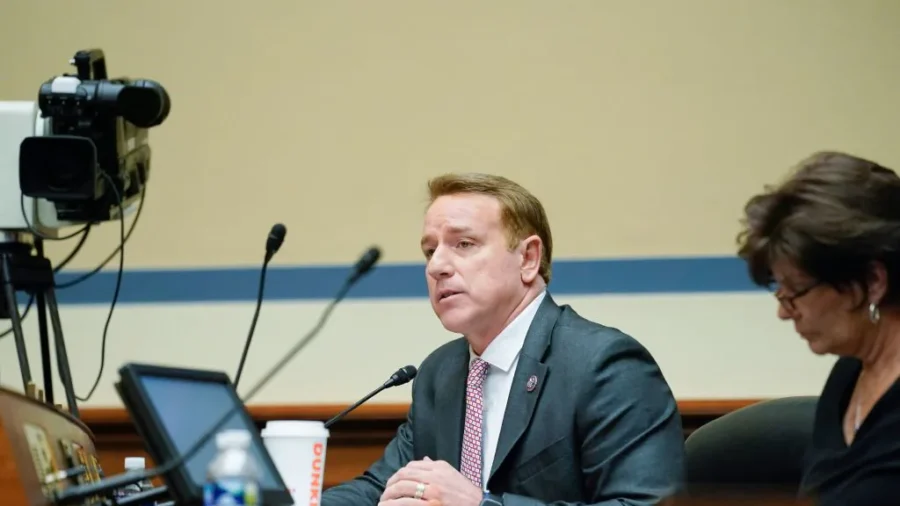
A U.S.Republican lawmaker introduced a new bill aimed at revoking federal funding for American universities that cooperate with organizations suspected of having ties to the Chinese Communist Party (CCP).
The Espionage Protection Act would amend the National Security Act of 1947 to prohibit federal funding for intelligence programs at universities that maintain contractual or in-kind relationships with organizations tied to the CCP.
The legislation would revoke federal funding for grant programs, including: Intelligence Community Centers for Academic Excellence; Intelligence Advanced Research Projects; Undergraduate and graduate training; Stokes Scholarship Programs and SMART Scholarship for Service Program.
In the post, he cited several examples: between 2020 and 2024, numerous high-profile espionage incidents exposed severe CCP infiltration within major U.S. academic and research institutions.
Prominent American academics, including Harvard’s chemistry department chair Charles Lieber and professors at institutions like Texas A&M and Ohio State, were charged with concealing their financial ties to Chinese state programs while securing millions in federal and NASA grants.
Simultaneously, Chinese nationals and students were caught actively smuggling stolen biological research materials out of the country, as seen in arrests at Boston’s Logan Airport and Indiana University.
The espionage efforts also heavily targeted university infrastructure and national security. In 2023, state-sponsored Chinese hackers breached Houston universities to steal vaccine and medical data as part of a massive global cyberoperation.
Furthermore, the University of Michigan emerged as a recurring hotspot for illicit activity; Chinese nationals there were caught photographing military vehicles at a Michigan National Guard base and, in a separate incident, conspiring to smuggle biological materials into a U.S. lab. All these cases underscore a coordinated, multi-faceted campaign to illicitly acquire American scientific research and intellectual property.
"Enough is enough," he posted. "We must secure our research institutions, vet foreign students tied to the CCP, and stop treating academic espionage like a campus policy issue. American national security comes first."
Several similar bills have been introduced in recent years, mostly by Republicans, targeting U.S. universities' ties to the CCP, Confucius Institutes, or other "entities of concern." These focus on restricting federal funding to protect against espionage, IP theft, and foreign influence.
Fallon’s bill has currently been referred to the House Permanent Select Committee on Intelligence. It must still be passed by both the House of Representatives and the Senate before it can be sent to the president to be signed into law.