


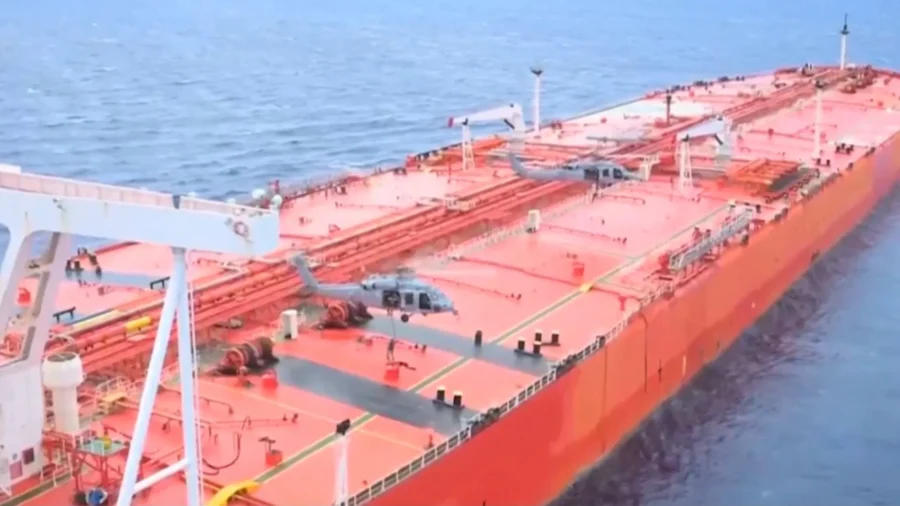
The U.S. forces overnight intercepted a sanctioned vessel in the Indo-Pacific area linked to Iran as part of a global maritime enforcement effort to disrupt illicit networks, according to the Pentagon on Tuesday.
Along with its statement, the department published video footage of the military boarding the vessel.
United States Indo-Pacific Command (INDOPACOM), which oversees the Indian and Pacific oceans and surrounding areas, is not responsible for the Persian Gulf or the Strait of Hormuz, which fall under the U.S. Central Command (CENTCOM), which oversees the Middle East.
The vessel was believed to be a part of Iran’s shadow fleet of vessels.
"As we have made clear, we will pursue global maritime enforcement efforts to disrupt illicit networks and interdict sanctioned vessels providing material support to Iran - anywhere they operate," the Department of War said.
"International waters are not a refuge for sanctioned vessels. The Department of War will continue to deny illicit actors and their vessels freedom of maneuver in the maritime domain," it added.
The U.S. Treasury Department's Office of Foreign Assets Control revealed earlier this month that it has been intensifying pressure on Iran’s allegedly criminally-run oil transportation infrastructure.
OFAC has so far sanctioned more than two dozen individuals, companies, and vessels operating within the network of Iranian oil shipping magnate Mohammad Hossein Shamkhani, according to a news release. Shamkhani is the son of Iranian security official Ali Shamkhani, who was killed by U.S. strikes on the first day of war.
The effort, dubbed Operation Economic Fury, mirrors the U.S.-Israel military campaign against Iran called Operation Epic Fury.
Operation Economic Fury augments the war effort by applying economic pressure against Iran.