


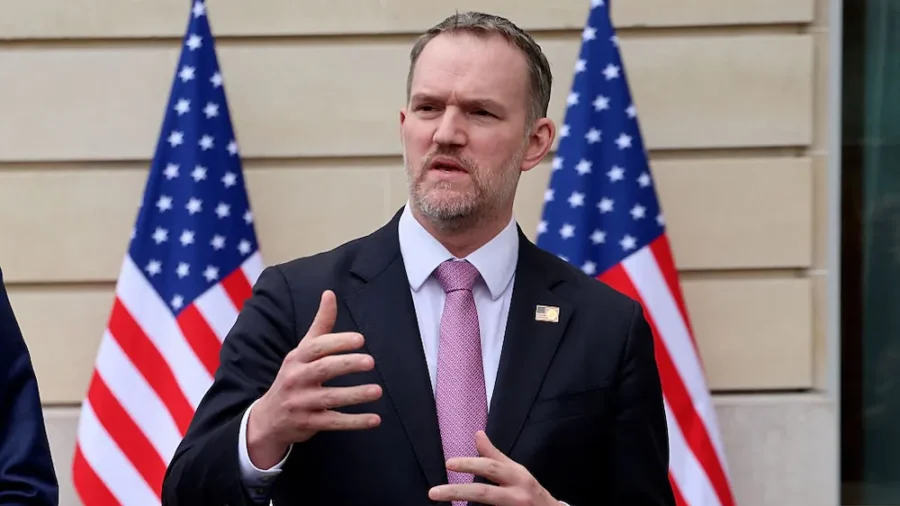
U.S. Trade Representative Jamieson Greer said on Friday that no new tariffs are planned on foreign semiconductors, while underscoring the need to protect the domestic industry as part of broader efforts to bolster American manufacturing.
Greer made the remarks at an event celebrating the expansion of a Micron Technology facility located in the District of Columbia suburbs, stressing the administration’s commitment to reshore key technology production.
His comments reflect continuing discussions within the Trump administration on trade measures designed to reduce dependence on foreign supply chains, particularly from Asia.
“There was not an immediate tariff coming,” he said.
Greer said the strategic protection for the semiconductor sector is part of discussions, but that implementation must be done with precision.
“Having tariffs on semiconductors is really important,” Greer said. “What’s even more important than having protection for facilities like this is making sure we do it on the right timing and in the right amount.”
The United States produces only a small share of the semiconductors—10 percent—rendering it vulnerable to global disruptions.
“These are complex supply chains. We’ve seen offshoring of semiconductors for decades,” Greer said, adding the government wants to ensure there are no immediate tariffs on companies that are producing semiconductors, and will allow companies to import an unspecified amount during that “reshoring phase.”
Micron stated Friday it had commenced 1-alpha DRAM wafer manufacturing in Manassas, Virginia. The chip is the most advanced memory chip produced in the United States, according to Micron. DRAM chips are used in personal computing, cars, industrial operations, wireless communications, AI, and Micron’s High-Bandwidth Memory. These chips are critical for enabling new AI models.
The administration has established policies combining incentives for domestic production with targeted trade tools to mitigate national security risks.
Greer’s comments echo the administration’s approach of employing Section 232 investigations where necessary, while preventing sudden disruptions to critical industries.
The administration is seeking to strengthen import duties under Section 232, a federal law that allows the president to order tariffs or other measures if the Commerce Department determines that certain imports threaten national security.
Industry stakeholders celebrate assurances of measured policy steps amid efforts to secure U.S. facilities such as the expanded Micron plant in Virginia.
Greer has in the past said that trade policy tools, including tariffs, can encourage domestic investment.