


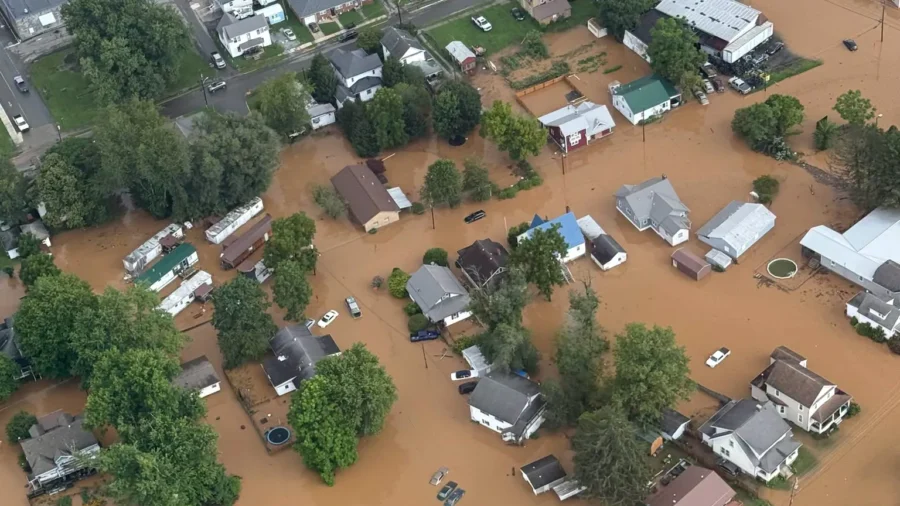
West Virginia Gov. Patrick Morrisey declared a statewide State of Emergency for all 55 counties Tuesday after another round of storms triggered flash flooding, mudslides, and water rescues. The declaration comes just weeks after a deadly July disaster still affecting parts of the state.
"West Virginians have been hit by another round of severe weather at a time when many communities are still recovering from last month's storms," Morrisey said in a press release. "This declaration gives our emergency responders, state agencies, and local officials the flexibility they need to move quickly, get resources where they are needed, and help communities recover from the damage.”
Charleston Declares Its Own Emergency
The flooding also led Charleston Mayor Amy Shuler Goodwin to declare a city-level emergency Aug. 17. "Assessment, cleanup and repair of the damage caused by these floods will be ongoing for months with cost estimates in the millions of dollars," Goodwin stated in her proclamation.The Kanawha County city saw up to 6.0 inches of rain during Monday's storm, which washed out streets, caused flash flooding and led to dozens of water rescues. City crews began assessing damage and clearing debris the day after the storm hit.
July Storms Set Records
The declarations followed a deadlier round of flooding that began July 21, when Morrisey first declared a statewide emergency as storms brought flash flooding, landslides, and road closures to all 55 counties. "State and local emergency officials are working to assist those affected, and this declaration ensures we can quickly deploy resources wherever help is needed," Morrisey said at the time.Lewis, Pleasants, and Upshur counties suffered the most damage. Up to 7 inches of rain fell in a six-hour span, closing Interstate 79, U.S. Route 48 and secondary roads. The National Weather Service issued its top-tier Flash Flood Emergency designation, known as a Particularly Dangerous Situation, along with a "SEEK HIGHER GROUND NOW" warning.
In Upshur County, water levels on Sand Run, which feeds the Buckhannon River, rose to record highs, surpassing a November 1985 flood that killed 47 people statewide, according to U.S. Geological Survey data. Morrisey deployed National Guard members to help affected communities after that declaration.