


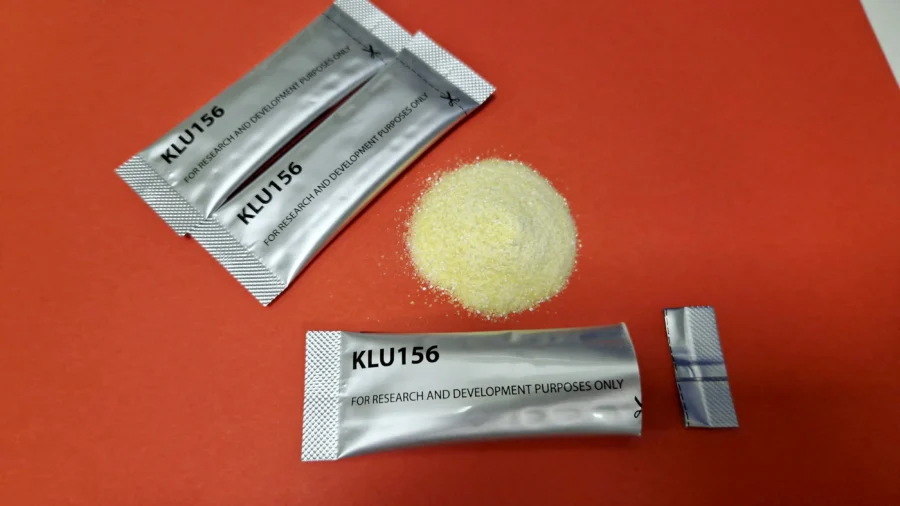
Researchers have identified two new methods of treatment to combat malaria's evolving threat, revealing on Wednesday two new drugs for treating the mosquito-borne disease.
The trial, conducted across 34 sites in 12 African countries, tested the non-artemisinin-based treatment on nearly 1,700 patients, approximately half of whom were children. GanLum demonstrated a cure rate of better than 97 percent, slightly exceeding that of a standard artemisinin-based treatment. Using a more conservative analysis required for regulatory submission, the cure rate reached 97.4 percent compared to 94 percent for standard care, the company said.
"GanLum could represent the biggest advance in malaria treatment for decades, with high efficacy against multiple forms of the parasite as well as the ability to kill mutant strains that are showing signs of resistance to current medicines," said Dr. Abdoulaye Djimdé, a parasitology professor at the University of Science, Techniques and Technologies of Bamako, Mali.
The parasite that causes malaria has repeatedly developed resistance to successive drug classes over the past decades. Chloroquine resistance became widespread by the early 2000s, with malaria deaths reaching over 1.8 million annually before artemisinin-based compounds emerged.
Dr. David Sullivan, a malaria expert at Johns Hopkins University, said a drug like GanLum is needed.
The parasite that causes the disease is developing resistance to existing drugs, meaning “the ice is thinning,” Sullivan said. “It hasn’t given way, but we’re concerned.”
Novartis noted that side effects included fever and anemia, consistent with current antimalarial medications. A higher rate of vomiting occurred right after administration, which company officials attribute to taste. They said researchers are exploring flavoring or sweetening options.
4-Drug Single Malaria Dose
A second research team presented another approach at the American Society of Tropical Medicine and Hygiene conference in Toronto. Dr. Ghyslain Mombo-Ngoma led a West African study testing a single-dose combination of four widely available antimalarial drugs: artemisinin, pyronaridine, sulfadoxine, and pyrimethamine.From May 2024 through October 2025, researchers treated more than 1,000 patients in Gabon. Half received the four-drug, one-time treatment while the rest received standard three-day artemisinin-based therapy. Blood tests 28 days later showed 93 percent of patients receiving the single-dose treatment were parasite-free, compared with 90 percent on standard treatment.
Mombo-Ngoma said discussions were underway with manufacturers to produce an inexpensive, single-capsule formula.
However, Sullivan cautioned that resistance already exists to some component drugs, likely making this approach "a short-term fix."
According to the Novartis press release, there were 263 million malaria cases and 597,000 deaths in 2023, with Africa bearing the overwhelming burden. Children under five accounted for roughly three-quarters of regional malaria deaths.