


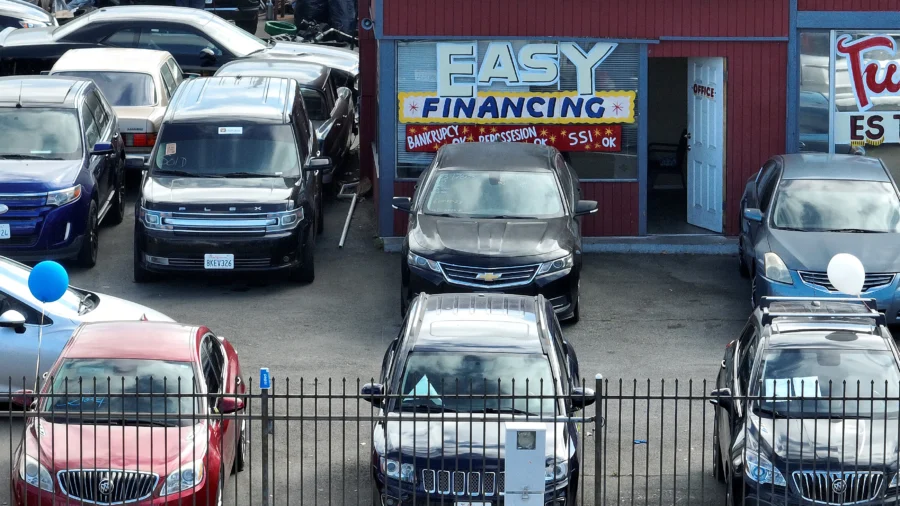
The report noted that 65 percent of U.S. car owners have “noticed” vehicle prices rising in the past year, and 85 percent say that even a $150 reduction in auto loan costs would make life “significantly easier.”
"Most car owners we surveyed are carrying real financial stress, and many of them are sitting on a loan they've never questioned,” says Simon Goodall, CEO of Caribou, in a statement.
“We especially saw an increase during the first two years of COVID-19 when manufacturer production was significantly reduced,” Michael Kltizke, CEO at Auto Law Firm, told NTD News.
Here's How to Bring That Monthly Car Payment Down
The good news is that vehicle buyers have multiple ways to curb the high cost of auto ownership, with these strategies leading the way.Cut into the principal owed with a bigger down payment
Kltizke said one of the best options is to make a larger down payment, which is why negative equity on a trade-in is a big mistake.Make a principal-only payment
You can pay any amount earlier on an auto loan, and the more the better.Stop stretching loan payments out
One of the best ways to cut down on auto debt more quickly is to stop extending the loan term, especially when borrowers refinance vehicles repeatedly or roll negative equity from one car into the next loan.“That creates a cycle where people are always underwater on the vehicle,” Ashley Morgan, an attorney at Ashley Morgan Law, PLC., told NTD. “If possible, borrowers should try to keep the same vehicle longer and aggressively pay down principal once the payment becomes manageable. Pay extra on your loan whenever possible and have any extra funds applied to the loan principal.”
Make payments twice per month
One vehicle cost reduction strategy that’s often overlooked but can yield significant savings is paying half the monthly payment every two weeks rather than once a month. “This often results in the equivalent of one extra full payment per year, which can significantly reduce the loan term while requiring relatively little lifestyle adjustment,” Kenneth Vern Bolam, president and founder at First Financial, told NTD.Don’t Make This Big Car Loan Mistake
For vehicle owners struggling to keep up with their auto loan, ignoring the lender is by far the most egregious error, Vern Nolam said. “Contacting the lender early can provide options for hardship programs, consolidation, payment deferment, and even voluntary vehicle surrender before missed payments begin affecting credit scores and leading to repossession,” he noted.Interest will continue to accrue on the loan, but at least you are avoiding being in default. If you are in default, the lender can repossess the vehicle. “The lender doesn’t need to give you a warning, and they don't have to wait to do a repossession,” Klitzke said. “As soon as the account is in default, the lender can repossess the vehicle. A repossession is going to significantly lower your credit score, and the repossession costs are added to your loan.”
Know that lenders also don't want to repossess cars, as it’s a hassle for them. “If you’re talking to the lender and they can see you are trying to get current on your payments, then most lenders are not going to move forward with a repossession,” Klitzke added. “The most important thing is that they see meaningful effort on your part to get the account current.”