


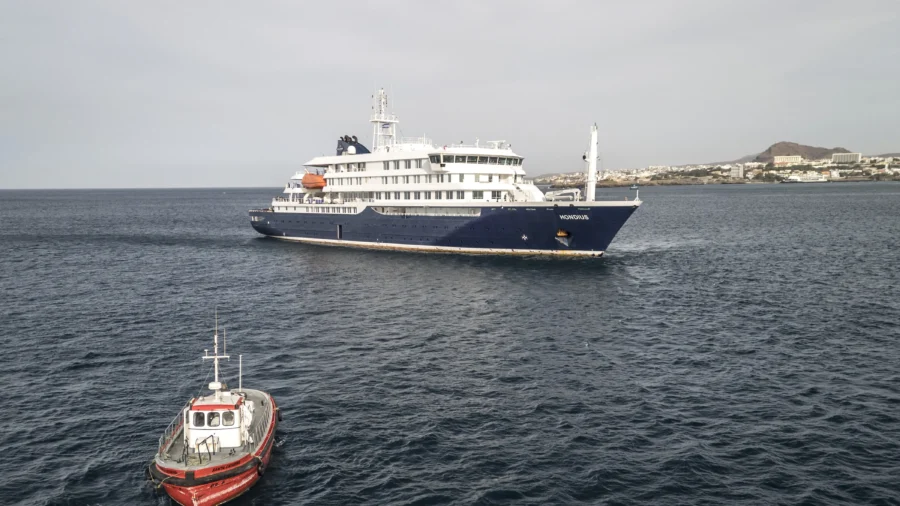
An outbreak of the deadly hantavirus on a cruise ship off the coast of Cape Verde will not become the “next COVID,” said an official with the World Health Organization (WHO) this week.
“This is not the next COVID,” Maria Van Kerkhove, director of epidemic and pandemic preparedness at the UN health body, said at a news conference on Wednesday. “Most people will never be exposed to this.”
In a news conference Thursday, Van Kerkhove said, “I want to be unequivocal here. This is not SARS-CoV-2. This is not the start of a COVID pandemic. This is an outbreak that we see on a ship,” referring to the name of the coronavirus that causes COVID-19.
There are five confirmed cases so far, she said, adding that she “understands why” some members of the public might be worried.
The vessel is now sailing to Spain’s Canary Islands, where it is expected to arrive on Saturday or Sunday, with more than 140 passengers and crew members still on board.
Van Kerkhove said that hantavirus doesn’t transmit in the same manner as COVID-19, but the virus instead spreads via “close, intimate contact.” Most hantavirus strains do not transmit via person-to-person contact, she added.
Most hantaviruses, the official said, are spread by rodents, such as mice or rats, or contact with their saliva, feces, or urine. The Andes variant of hantavirus, which was identified as the cause of the outbreak on the cruise ship, is the only strain known to transmit from person to person.
“The actions that are being taken on board [the cruise vessel] are precautionary to prevent any onward spread,” Van Kerkhove said.
But on Wednesday, she warned that hantavirus “is a serious infectious disease” that can lead to death.
“People who are hearing this who are on the ship are ... rightfully so scared, and the general public might be scared as well,” she added.
In Argentina, a team of investigators tasked with determining the origins of the deadly hantavirus on the cruise ship has yet to leave for the southern town they suspect is the source, officials from the country’s Health Ministry told media outlets on Thursday.
WHO has said it is working with health authorities in Argentina to understand the deceased Dutch couple’s movements and has arranged to ship 2,500 diagnostic kits from Argentina to laboratories in five countries.

Orthohantaviruses, commonly called hantaviruses, are naturally found in rodents and can cause severe infections in humans that can lead to death, according to the Centers for Disease Control and Prevention (CDC). Spread to people primarily by rodents, the viruses can cause hantavirus pulmonary syndrome or hemorrhagic fever with renal syndrome, the CDC says on its website.
Hantavirus symptoms start with flu-like symptoms such as fever, fatigue, and muscle aches around one to eight weeks after exposure. The pulmonary version of the disease, within four to 10 days, then rapidly progresses to severe signs and symptoms, such as fluid buildup in the lungs, coughing, and shortness of breath, officials say.
The renal disease usually develops one to two weeks after exposure, but symptoms can appear as long as eight weeks later, the CDC says. The symptoms include intense headaches, back and abdominal pain, fever or chills, nausea, blurred vision, lack of blood flow, low blood pressure, internal bleeding, and acute kidney failure.