


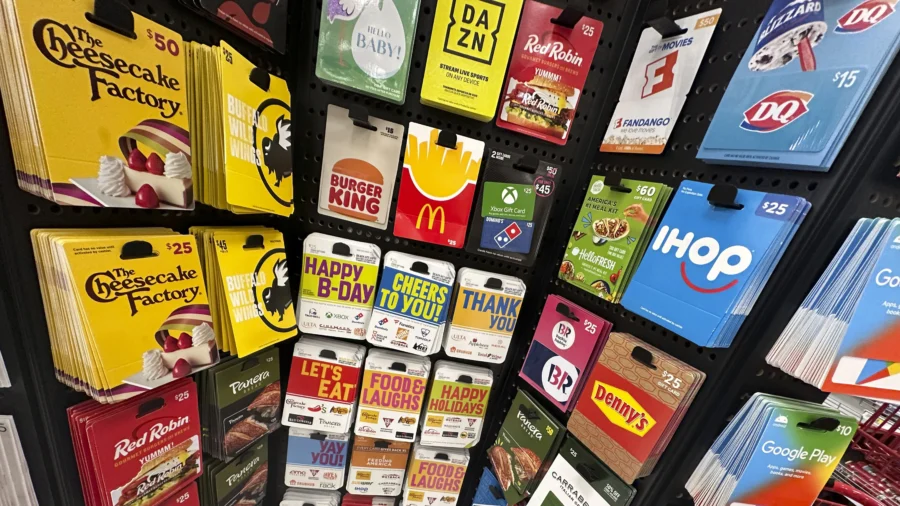
The holidays are here, and U.S. consumers are happy to pop gift cards under the tree and take the guesswork out of seasonal shopping.
More people than ever are doing so, with gift cards comprising 39 percent of holiday budgets, according to Blackhawk Network, a global provider of branded payment solutions. That figure is up 12 percent since 2024.
Shoppers plan to purchase gift cards rather than physical gifts this holiday season, largely due to concerns about price increases across key categories such as clothing, toys, and electronics.
“Holiday shoppers are becoming strategic in how they maintain generous traditions despite economic headwinds," said Brett Narlinger, chief revenue officer at Blackhawk, in a statement. "Rather than cutting back on gifting entirely, consumers are embracing gift cards as solutions that allow them to give meaningful presents while staying financially responsible."
Know What You’re Getting With a Gift Card
Like any payment card, gift cards come with terms and conditions that users may not know about, especially if they don’t check the fine print. These potential surprise issues should be covered in advance by gift card owners.
Know the potential charges and checkpoints
Fees and expiration dates still apply to gift cards.
"The most impactful unknown is that an estimated $23 billion in gift card value sits unspent because recipients treat them as non-expiring cash rather than regulated financial instruments,” Adam Zucker, vice president of marketing at MyRegistry.com, told NTD News. “Although federal law mandates a five-year minimum expiration, cards can begin accruing dormancy or inactivity fees after just 12 continuous months of non-use, silently draining the card’s balance.”
This crucial lack of management is why the average unused card value “is worsening year-over-year,” Zucker noted.
You can use gift cards as a money-saving asset
Gift card users should take immediate steps to protect and optimize their cards once they are in hand.
"Recipients should use the card quickly to avoid the loss of value due to dormancy fees, physical loss, or retailer insolvency,” Zucker said.
Recipients should also register the card in a mobile wallet for secure storage and alerts. “Additionally, always use a split-payment method at checkout to ensure the card’s entire value is spent, eliminating any unusable residual balance,” Zucker added. “These strategies transform the gift card from a liability into a fully realized asset."
Match gift cards with current coupons
Gift cards also allow shoppers to stack savings in a way that most people don't take advantage of.
“If you know you’ll be spending at a particular retailer, buying a cashback-eligible gift card essentially gives you a discount before you even start shopping,” Alexander Ketter, managing director USA at Coupons.com, told NTD. “When you use that gift card alongside existing coupons, you’re essentially stacking those savings on top of each other. This comes in handy when shopping for gifts during the holiday season.”
Use your gift cards quickly
One common mistake consumers make during the busy holidays is forgetting they have one.
“The most important thing is to plan to use a gift card right away,” Shelley Hunter, consumer gift card analyst at eGifter, told NTD. She recommends taking these steps once handed a gift card.
First, put the gift card in your wallet or mobile wallet next to the bank cards you regularly use. “This will give you the visual reminder to use the cards,” Hunter said.
Another step is to give yourself a note or put it on the calendar (e.g., "Lunch with Mom / Use Gift Card"). “If you can add the gift card to an account, that's even better,” Hunter noted. “For example, you can redeem an Amazon gift card immediately by adding it to your Amazon account. Then Amazon will prompt you to redeem it on your next purchase.”
Optimize the Experience and Master Your Gift Cards
The bottom line? The longer you hold onto a gift card, the higher the probability you'll lose it, forget you have it, find non-use fees have drained the balance, or the store/restaurant is no longer in business.
“This is a 'gift', so use it as intended and enjoy it,” Hunter advises.
The views and opinions expressed are those of the interviewees. They are meant for general informational purposes only and should not be construed or interpreted as a recommendation or solicitation. NTD does not provide investment, tax, legal, financial planning, estate planning, or any other personal finance advice. NTD holds no liability for the accuracy or timeliness of the information provided.