


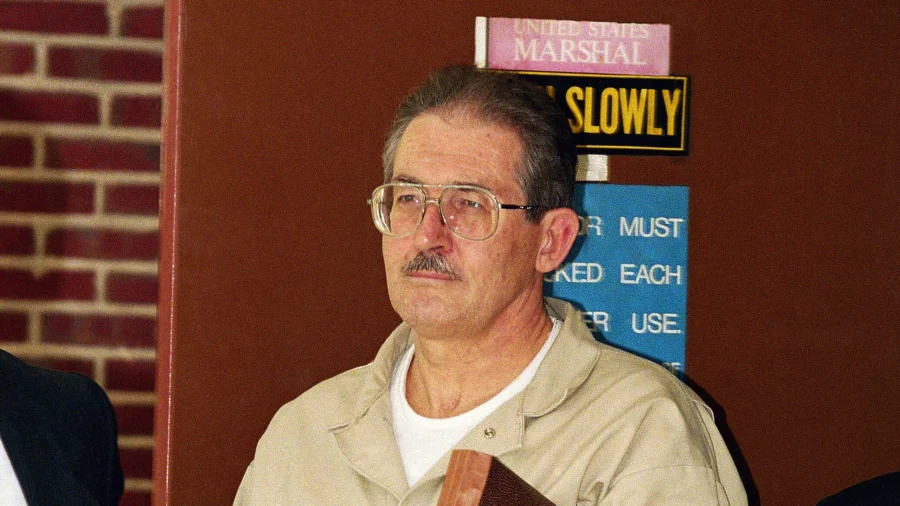
Aldrich Ames, the CIA officer whose defection to the Soviet Union during the Cold War ranks among the most catastrophic intelligence breaches in American history, has died in a federal penitentiary in Maryland at age 84, according to the Bureau of Prisons.
The 31-year CIA veteran was fluent in Russian and specialized in counterintelligence against Soviet services, making his defection a great threat to Western espionage. His initial meetings with KGB handlers during the summer of 1985 yielded classified information about CIA and FBI human sources targeting the Soviet Union. By December of that year, the KGB had already compensated him $50,000 for his treachery.
The scope of Ames's betrayal widened during a 1986–1989 posting in Rome, where he maintained regular contact with KGB officers and Russian diplomats. The Russians informed Ames that they had paid him $1.88 million within four years of his initial recruitment. Upon returning to Washington in 1989, Ames continued to compromise American intelligence by employing a tradecraft method as old as espionage itself: dead drops. He would leave classified documents at prearranged locations, receiving payment and instructions from KGB officers who retrieved them at separate locations.
The human toll of his espionage became apparent as the CIA and FBI discovered that their recruited Russian sources were being arrested and executed. Ames's disclosures included the identities of 10 Russian officials and one Eastern European operative spying for the United States or Britain, along with information about spy satellite operations and eavesdropping procedures. These compromises are blamed for the deaths of Western agents operating behind the Iron Curtain.
The FBI's investigation, initiated in May 1993 following analytical reviews and reports of Ames's unexplained wealth, proved decisive. During a 10-month intensive surveillance operation, investigators observed Ames making a chalk mark on a mailbox in October 1993—a signal to his Russian handlers confirming his intention to meet them in Bogota, Colombia. Searches of his home also revealed evidence linking him to the Russian foreign intelligence service, according to the FBI.
Ames pleaded guilty on April 28, 1994, without proceeding to trial. He admitted accepting $2.5 million from Moscow for U.S. secrets spanning nearly a decade. In a jailhouse interview with The Washington Post conducted before sentencing, Ames attributed his motivations to "financial troubles, immediate and continuing." Yet when facing the court, he attempted to minimize the damage, claiming he had not "noticeably damaged" the United States or "noticeably aided" Moscow.
"These spy wars are a sideshow which have had no real impact on our significant security interests over the years," he told the court, despite acknowledging "profound shame and guilt" for "this betrayal of trust, done for the basest motives."
The judge was unmoved. Ames received a life sentence without the possibility of parole. His wife, Rosario, pleaded guilty to lesser espionage charges for assisting his operation and served 63 months in prison before her release.
Ames's case marked the first major mole arrest in the post-Cold War era, followed by others including FBI agent Robert Hanssen, who was arrested in 2001 for selling secrets to Russia. He died in prison in 2023.