


Dr. Peter Stafford, his wife, Dr. Rebekah Stafford, and their four children arrived in the United States after spending several weeks in Germany, where Stafford received treatment following his evacuation from the DRC during an ongoing Ebola outbreak. Stafford was among Serge's medical missionaries treating patients in the region when the outbreak began.
Serge said Stafford has remained Ebola-free since May 30 and continues to improve after his release from Berlin's Charité University Hospital. The organization said U.S. health authorities remain in regular contact with him.
“I am filled with gratitude to God for preserving my life, to all those who prayed on my behalf, and to the many medical providers who cared for me,” Stafford said.
“I am feeling well and thankful to be reunited with Rebekah and the kids. Our prayers continue for those in Congo who are facing this devastating epidemic and for the ongoing efforts to control the disease,” he said.
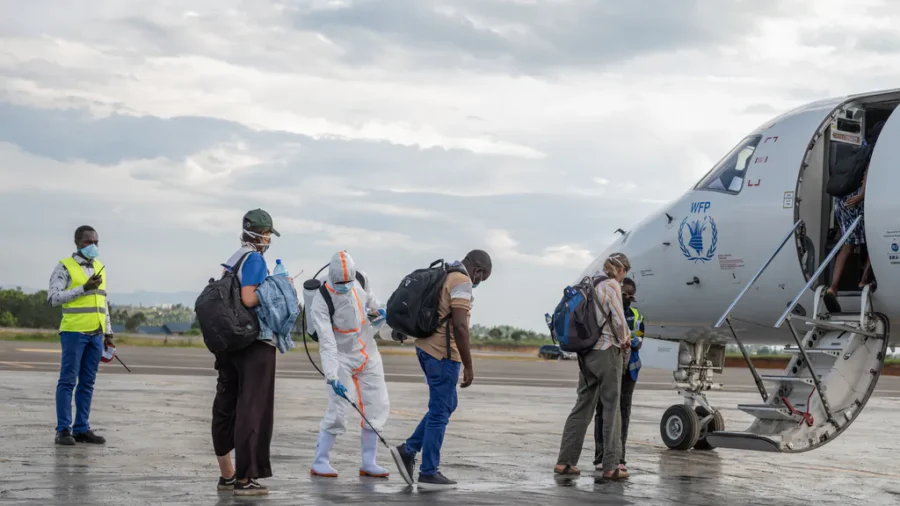
Serge said Stafford's condition worsened rapidly following his diagnosis in May. On the day he was evacuated from Congo, he was unable to stand on his own and was assisted by a Congolese doctor wearing full protective gear.
According to the organization, the physician expressed confidence that Stafford would recover. Stafford's family also thanked the medical professionals in Congo, Germany, and the United States who cared for him during his illness.
All Serge missionaries and family members who had been serving in the DRC have now been released from care and monitoring and have arrived safely in the United States, the organization said.
Stafford was admitted to Charité University Hospital on May 20 after being diagnosed with a Bundibugyo Ebola virus infection and placed in a special isolation ward.
“The hospital statement today confirmed the complete absence of symptoms for more than 72 hours and a negative test result in repeated PCR tests, with the public health department able to lift the isolation order today,” Serge stated in its June 6 update.
Stafford's family, classified as high-risk contacts, also remained in quarantine. None developed symptoms, and laboratory testing did not detect the virus.
The case occurred amid an ongoing Ebola outbreak in parts of the DRC and neighboring Uganda.
Health officials identified the outbreak after a cluster of severe illnesses among health care workers in northeastern Congo earlier this year.
As of June 14, the DRC had reported 808 confirmed cases and 192 confirmed deaths. Uganda had reported 19 confirmed cases and two confirmed deaths as of June 16, according to CDC data.
The CDC said no Ebola cases linked to the outbreak have been reported in the United States and that the overall risk to the American public remains low.
Federal health officials have issued travel health notices for affected areas and implemented enhanced screening and travel measures for some passengers arriving from the region.
The Bundibugyo strain has caused only two previous known outbreaks, one in Uganda in 2007 and another in the Democratic Republic of the Congo in 2012. The CDC said the current outbreak is the largest recorded outbreak involving that strain.