


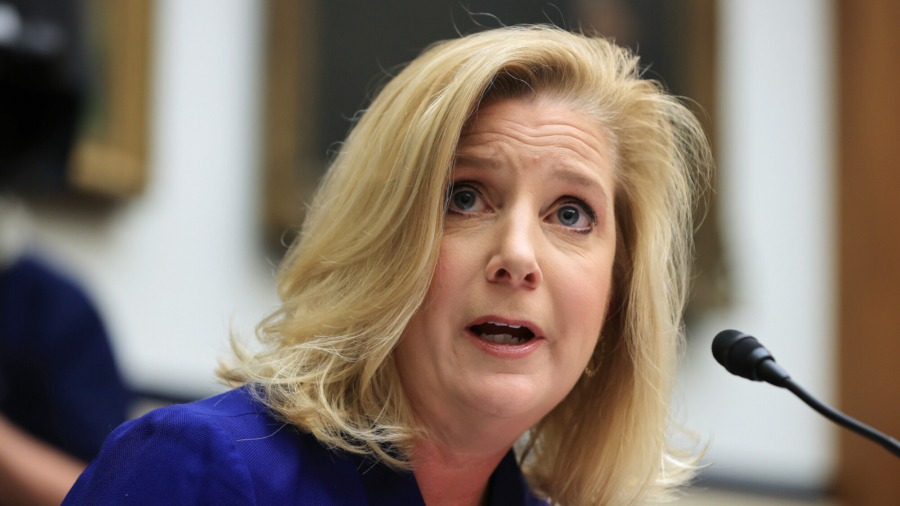
Army Secretary Christine Wormuth has said resolving the service's recruiting problems remains one of her top priorities, but that it may stretch into 2024 or further before the service can recover from its recent recruiting shortfalls.
"It took us more than a year to get into the situation that we’re in, in terms of the recruiting landscape, and I think it’s going to take more than a year to turn it around," Wormuth said during a Feb. 23 panel discussion hosted by Project for Media and National Security at George Washington University.
"We are really focused on a call to service. We have set a very ambitious recruiting target this year—65,000," Wormuth said. "That’s 5,000 more than, frankly, our goal was last year. We are pulling out all of the stops to try to do our very best to make that mission; but that is a major priority for us this year."
Wormuth described the Army as being in a process of reintroducing itself to the American public. Military officials have said the COVID-19 pandemic played a role in undercutting recruiting because recruiters have traditionally relied on access to public schools to get young Americans interested in military service and many recruiters had little to no access to schools throughout 2020 and parts of 2021.
Some misperceptions about Army service may also have had an impact on recruiting.
Republicans See 'Wokeness' problem
Some Republican lawmakers have attributed the introduction of so-called "wokeness" into the military as a contributing factor to the recruiting challenges."Wokeness at the DoD has harmed recruitment, retention, and morale, wasted service members’ time and taxpayer’s dollars, and undermined the apolitical character of the military, which is a major threat to democracy and the American way of life,” said Rep. Jim Banks (R-Ind.), the chairman of the House Armed Services Subcommittee on Military Personnel and a U.S. Navy Reserve officer.
"Having spent my career as an Army officer and green beret, I am very concerned with the Army’s ability to recruit and retain our nation’s best and brightest for military service," wrote Waltz, who is an Army Special Forces Green Beret. Waltz continues to serve in the National Guard, while also serving as chairman of the House Armed Service's Subcommittee on Readiness.
"In the AP article, you stated that the survey data is a tool to 'assuage the concerns that some may have, whether influencers or members of Congress, about wokeness or the vaccine mandate–which is now rescinded–and show they are not, by any means, primary drivers of the recruiting challenges we’re experiencing,'" wrote Waltz. "In the interest of transparency, we call on the Army to publicly release its entire data set, instead of cherry-picking data to fit a narrative. This issue is critical to our national security, and of great importance to the American people."
Debate Over Politicized Military
In the summer of 2020, as protests and riots over racial unrest spread throughout the country, the U.S. Army was caught sharing a training slide that listed then-President Donald Trump's "Make America Great Again" campaign slogan as an example of "covert white supremacy.""We get criticized, frankly, sometimes for being 'woke.' I'm not sure what 'woke' means," Wormuth said in an October press conference. "I think 'woke' means a lot of different things to different people but first of all I would say if 'woke' means, you know, we are not focused on war fighting, we are not focused on readiness, that doesn't reflect what I see."
“At a time when [we] are short of personnel, excluding personnel for reasons other than their ability to do the job, is just stupid," Smith said at the time. “This [resolution] does not help the military. This is not a good way to address serious issues.”
"I have zero time for the political distractions and BS, and I will very aggressively call that out," said Ryan, who is a West Point graduate and Army veteran.