


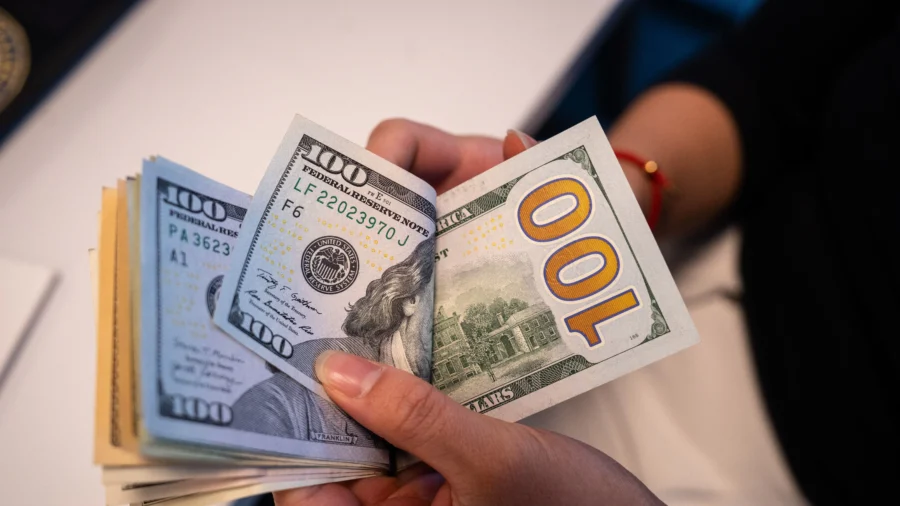
Love is yet another victim of the high inflation trend, with the cost of a date soaring coast to coast.
Additionally, 47 percent of singles say dating is simply not financially worth it, the report noted, while 58 percent of people in serious relationships or already married say they are financially dependent on their significant other, up from 40 percent in 2025.
“With spending on dating outpacing inflation, singles can feel priced out of love,” said Paul Dilda, Head of U.S. consumer strategy at BMO, in a statement. “Whether it’s a long-term relationship or a first date, it has never been more challenging to ensure the path to love is also the path to real financial progress.”
Middle-class and lower-income demographics are especially feeling the financial pinch on dating options.
Cutting the Cost of Date Nights
Personal finance experts agree that the cost of dating has gotten out of hand, but say there are ways to curb romance-related events."That $189 amount sounds alarming when you break it down,” Eric Pemper, managing member at CuraDebt, a tax and debt resolution company, told NTD News. “You’ve got an $80 dinner for two, $40 worth of drinks, $25 tip, and then $20 for rideshare Uber back home and another $20 there. This gives us a big $189 price tag for a simple date night.”
That drives so-called stack creep on a romantic night out, and the costs add up, Pemper said. “Tips have gone from 15 percent to 20-25 percent, drinks have doubled in 5 years, while 'a normal date' requires rideshares on both ends,” he noted. “People aren't blowing money on dating; they're paying for the cost of dating in 2026."
Trade dinner for lunch
One of the easiest ways to cut dating expenses that doesn't make you feel like a cheapskate—go from dinner at your usual restaurant to having lunch.“You can hit the same restaurant and the same menu items and cut your bill by 30-40 percent,” Pemper said. “That also works at happy hours from 4 p.m. to 6 p.m. in your area.”
Keep initial dates low-key
Pemper said there’s “no way” a first date should cost $200.“Instead, aim for a coffee or a drink, make it mostly a 60-90 minute meeting, and budget $25 and $40 in expenses,” he advised. “An expensive first date is an absolute disaster on all levels. You can end up spending $200 on a stranger with no chemistry, and now you're both tied to the table. Short and affordable is best as it allows for natural extension of your time together or graceful exit."
Other experts say that first dates actually work better when cheaper.
“If you spend $200 on a first date, you front-load pressure on both parties involved,” Manuel Martinez, founder of qYouRated.com, a local events guide and services company, told NTD. “What comes next? If the date is going so-and-so, you can't leave gracefully, and so the sunk-cost feeling makes the post-date evaluation harder.”
Change the dating expectations
Designing dates around movement and play works, too, while keeping costs down.Be honest
It’s also advisable to get comfortable lightly talking about money and expectations upfront."A simple, 'I’m keeping things pretty low-key and budget-conscious this month—how about we do X?' is honest and attractive," Miller noted. “Money transparency actually correlates with better overall financial health and can lower overspending. In fact, couples who talk openly about money tend to make more aligned choices, including around dates.”
Kindness and character go a long way on dates, too, and it’s free.
“Don’t forget that mood is created far more by attention and presence than by price point,” Miller added. “Putting your phone away, maintaining eye contact, asking curious questions, sharing stories, ending with a clear, kind expression of interest. That’s what makes a date feel romantic.”
Taking the long view, dating should be about seeing if there is a spark and not treating the date like a transaction.
“Spending $200 on dinner and drinks when the same budget could buy two of you tickets to a once-a-year touring show that becomes a memory, is a big mistake,” Martinez said. “Money spent on a unique experience compounds emotionally; money spent on a forgettable Tuesday dinner doesn't.”
If you're going to spend, “spend on something neither of you would have done alone,” Martinez added.