

Rare Mosquito-Borne Virus Confirmed in South Carolina

Oconee County Emergency Services said on July 30 that it is monitoring the situation along with the state’s Department of Health.
Published: 7/31/2026, 11:29:16 PM EDT
Rare Mosquito-Borne Virus Confirmed in South Carolina
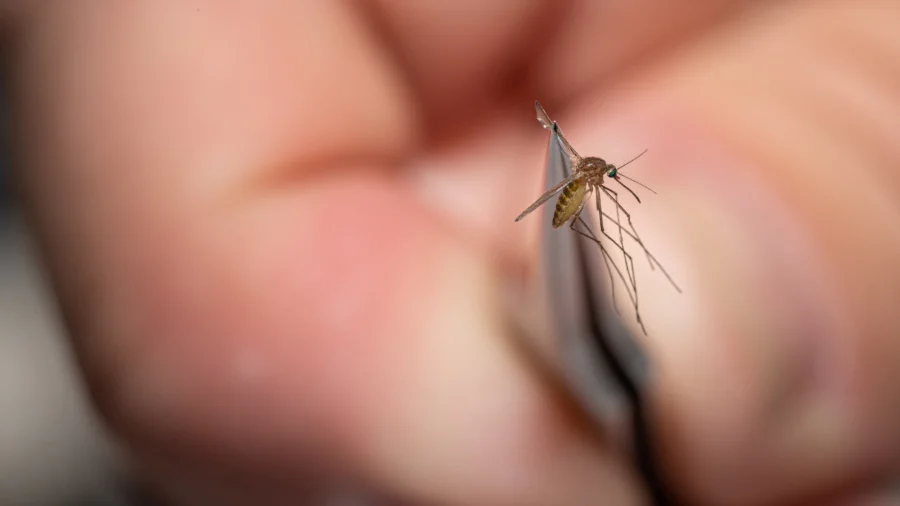
Matthew Vanderpool, environmental health specialist and entomologist for the Louisville Metro Department of Public Health and Wellness, displays a mosquito collected earlier in the day in Louisville, Ky., on Aug. 25, 2021. (Jon Cherry/Getty Images)

A rare case of La Crosse encephalitis from a mosquito-borne virus has been confirmed in Oconee County, South Carolina.

La Crosse virus spreads by infected mosquitoes and can cause fever, headache, nausea, vomiting, and fatigue. In severe cases, it may lead to brain inflammation, seizures, or paralysis.

Oconee County Emergency Services said on July 30 that it is monitoring the situation along with the state’s Department of Health.

“This is a single confirmed case, and there is currently no indication of widespread transmission in the county,” the county emergency service said.

The La Crosse virus cannot be spread through person-to-person contact or through coughing, sneezing, or touching. Infection occurs through the bite of an infected mosquito.

The virus is mainly transmitted by the eastern treehole mosquito, a species that is most active during the day and often found near wooded areas.

According to BugGuide.net, this type of mosquito is found in the Midwest and Eastern parts of the country, while most cases of the virus occur in the upper Midwestern, mid-Atlantic, and southeastern states, according to the Centers for Disease Control and Prevention (CDC).

The CDC states that while most people infected with the La Crosse virus never develop symptoms, severe disease most often affects children under 16.

Symptoms usually appear five to 15 days after a mosquito bite. Symptoms may include high fever, neck stiffness, confusion, fatigue, seizures, muscle weakness, vision loss, or paralysis. Encephalitis, also known as inflammation of the brain, can also occur. It can also be fatal.

As of July 28, the CDC’s national dashboard listed four La Crosse virus cases for 2026—one each in Alabama, North Carolina, Ohio, and Tennessee. The South Carolina case was announced after that update.
From 2003 through 2025, the CDC recorded 1,610 reported La Crosse cases and 15 deaths nationwide. Each year, 30 to 90 cases of La Crosse virus spreading to the brain or nervous system are reported nationwide, according to the CDC.
West Nile virus, by comparison, has been reported more widely nationwide in 2026. As of July 28, the CDC reported 113 human cases across 23 states, including 76 neuroinvasive cases.
The CDC highlighted the case of Leah, a 4-year-old Indiana girl who died from La Crosse encephalitis. After Leah complained of a persistent headache, her family took her to the emergency room. She died three days later. Her family shared Leah’s story as part of a CDC campaign to raise awareness about mosquito-bite prevention.

Health officials recommend using insect repellent, wearing long sleeves and pants, repairing window and door screens, and eliminating standing water from tree holes, tires, buckets, toys, and other containers.