


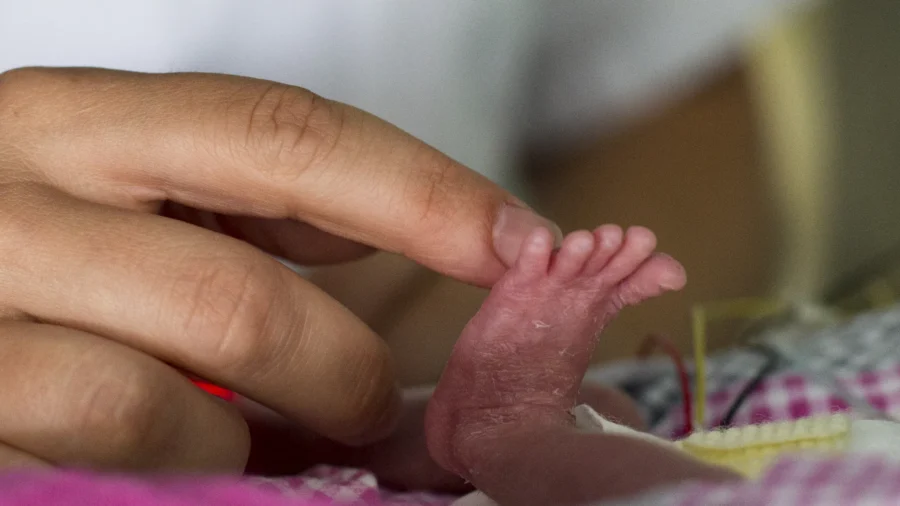
Births in the United States dropped in 2025, according to newly published data from the Centers for Disease Control and Prevention.
Approximately 3.6 million births were recorded in 2025, the CDC said. In 2024, officials logged 3.62 million births.
The new data, published in early February, are provisional and subject to change.
Data is still being compiled and analyzed, but the final tally might only add “a few thousand additional births,” said Robert Anderson, a statistician who oversees birth and death tracking at the CDC's National Center for Health Statistics.
Births in the United States have been falling since the peak of 4.31 million births in 2007. They went up slightly in 2021 and 2022 before decreasing to just under 3.6 million in 2023.
So far, only the number of births is available for 2025, and not birth rates and other information that can provide insight.
For example, although births increased in 2024 over the year before, the fertility rate actually fell, University of North Carolina family demographer Karen Guzzo said.
The fertility rate is a statistic describing whether each generation has enough children to replace itself, about 2.1 kids per woman. It has been sliding in the United States for close to two decades as more women wait longer to have children or don't have kids at all.
In 2024, 85 percent of women aged 20 to 24, 63 percent of women aged 25 to 29, 40 percent of women aged 30 to 34, and 23 percent of women aged 35 to 39 did not have children, according to U.S. Census data.
For 2025, “I wouldn’t expect birth or fertility rates to have risen; I would expect them to fall because childbearing is highly related to economic conditions and uncertainty,” Guzzo said in an email.
President Donald Trump and lawmakers have lamented falling births and introduced or enacted several measures that they say will help counteract the trend.

“My Administration recognizes the importance of family formation, and as a Nation, our public policy must make it easier for loving and longing mothers and fathers to have children," he wrote in that order.
Democrats have criticized the measures and said Republicans should approve paid family leave, subsidized child care, and other steps they say have been proven to improve the lives of women and families.