


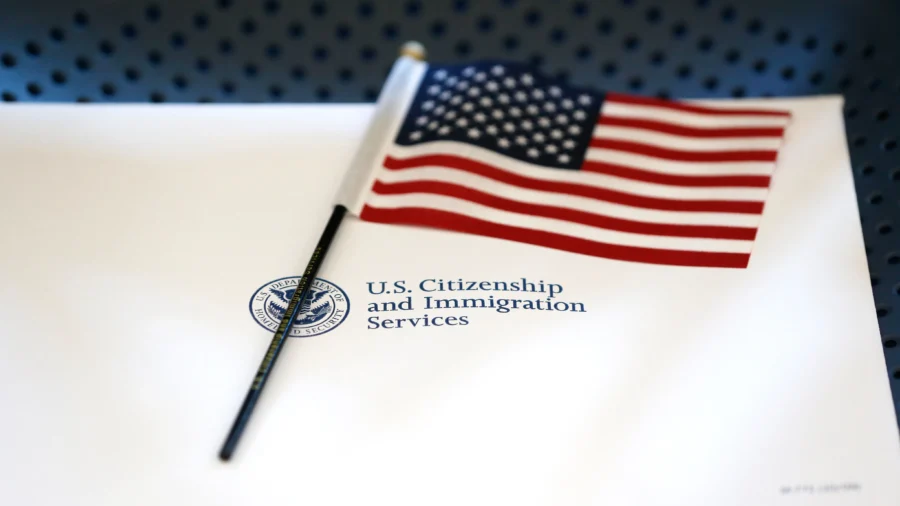
According to USCIS, the policy is consistent with long-standing immigration law and court decisions.
“We’re returning to the original intent of the law to ensure aliens navigate our nation’s immigration system properly. From now on, an alien who is in the U.S. temporarily and wants a Green Card must return to their home country to apply, except in extraordinary circumstances,” said USCIS Spokesman Zach Kahler.
Kahler said the policy allows the immigration system to function as the law intended, rather than incentivizing loopholes.
“When aliens apply from their home country, it reduces the need to find and remove those who decide to slip into the shadows and remain in the U.S. illegally after being denied residency,” he said.
The policy marks a tightening of the agency's handling of requests from nonimmigrants already in the country, including students, temporary workers, and tourists seeking green cards.
“Nonimmigrants, like students, temporary workers, or people on tourist visas, come to the U.S. for a short time and for a specific purpose,” said Kahler.
He said the system is designed so they can leave when their visit is over.
“Their visit should not function as the first step in the Green Card process,” he said.
Kahler explained in the announcement that following the law allows most cases to be handled by the State Department at U.S. consular offices abroad and frees up limited USCIS resources to focus on other priorities, such as visas for crime victims and trafficking survivors, and naturalization applications.
"The law was written this way for a reason," Kahler said. "Despite the fact that it has been ignored for years, following it will help make our system fairer and more efficient."
It said that U.S. courts and immigration authorities have consistently described it as an “extraordinary” form of relief granted as a matter of administrative discretion, not an automatic entitlement.
The memo guides officers to treat adjustment of status as an “extraordinary” discretionary benefit, not a standard pathway. Officers are advised to consider each case individually, weighing factors such as immigration violations, fraud, and failure to comply with visa terms. The agency said not leaving the United States as required may count against approval.
"This is particularly true when the failure is connected to the alien’s intention to reside permanently in the United States and the alien could have achieved that goal through the normal immigrant visa process," states the memo.
The memo also says adjudicators must also weigh all relevant factors, including family ties, immigration history, moral character, and any other relevant positive and negative details, to decide whether an applicant deserves a favorable decision.